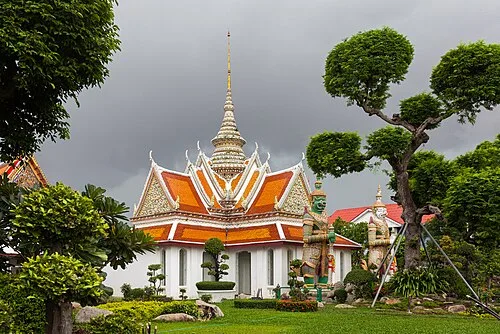
The best things to do in Pai are watching the sunset at Pai Canyon, riding a scooter to the waterfalls and hot springs, catching the morning mist at Yun Lai Viewpoint, climbing to the White Buddha, and eating down at the night market. Pai is a mountain town about 3 hours from Chiang Mai.
Last updated: October 2026.
Table of Contents
- What are the best things to do in Pai?
- How many days do you need in Pai?
- How to Reach Pai
- Best Time to Visit Pai
- How do you get around Pai?
- Where to Stay in Pai
- What does a Pai trip cost for Indian travellers?
- Do Indian travellers need a visa for Pai?
- Will the food work for Indian travellers?
- Pai at a Glance: Key Places and Terms
- FAQs
What are the best things to do in Pai?
A canyon, waterfalls, hot springs, viewpoints, a hilltop Buddha and a nightly market make up Pai, most of it reached by scooter. The town itself is small and walkable, the sights are spread around the valley.
Pai is a mountain town in Mae Hong Son province, settled into a green valley that backpackers turned into one of the north's easy-going hubs. You rent a scooter, ride out to a sight or two, and drift back for the market. Here is what earns your time, and how each one feels.
1. Watch the sunset from Pai Canyon
You walk out along a narrow spine of red earth with the ground falling away on both sides, dust under your shoes, warm wind pushing at you, and the whole valley opening up gold and hazy as the sun drops behind the ridges. People perch along the ledges and go quiet.
Pai Canyon (Kong Lan) is about 8 km south of town and free to enter. The trails are narrow with real drops and no railings, so wear closed shoes and keep back from the edge. Come an hour before sunset for a spot.
2. Ride out to the waterfalls
The scooter hums along a lane between rice fields, you park, and a short path leads to cool water falling into a pool. At Mo Paeng you slide down worn, slick rock into the plunge pool with a yell; at Pam Bok the water sits shaded and quiet between tall walls.
Mo Paeng and Pam Bok are the two easy waterfalls, both free and a short ride from town. They run strongest in and just after the rainy season, roughly July to November, and slow to a trickle in the hot months. Check the depth before you jump anywhere.
3. Soak in the Tha Pai hot springs
You lower into a steaming natural pool with the mineral smell around you and the heat loosening the ride out of your shoulders, trees overhead, cooler river water running alongside to mix in when it gets too hot.
Tha Pai Hot Springs sit about 7 km from town inside a small park. Foreign visitors pay around 300 THB (about 780 rupees). Sai Ngam, further north, is the more natural, rustic option. The springs are best in the cool season.
4. Catch sunrise and mist at Yun Lai Viewpoint
You climb a steep last stretch in the dark, cold for Thailand, and wait with a warm tea as the sky lightens and a white sea of mist fills the valley below, the hills poking through it like islands until the sun burns it off.
Yun Lai Viewpoint sits above the Santichon Chinese village, about 5 km from town, and charges around 20 THB (about 50 rupees). The drive up is steep. Go for sunrise in the cool season, when the mist is reliable, and pair it with the village below.
5. Climb the 353 steps to the White Buddha
You climb a long white staircase flanked by nagas, legs burning by the top, and turn around to a big white Buddha looking out over the whole Pai valley. In the late afternoon the light goes soft and the town spreads out small below.
Wat Phra That Mae Yen, the White Buddha, is about 2 km east of town, with 353 steps to the top. It is free. Cover your shoulders and knees out of respect. Sunset is the time, though the climb is hot until the sun drops.
6. Walk the Pai walking street night market
The main street closes to traffic and fills with charcoal smoke, skewers, pancakes, fresh juices and stalls of handmade things, music drifting out of the bars. You eat small plates as you wander and the crowd moves slowly.
The Pai walking street runs nightly through the centre of town, busiest in the cool season. Most snacks cost small money, from around 20 THB (about 50 rupees). It is the cheap, easy dinner every night of your stay.
7. Cross the Boon Ko Ku So bamboo bridge
You walk out on a springy bamboo walkway raised over bright green rice paddies, the stalks moving in the wind on both sides, a quiet broken only by birds and the creak of the bridge under you.
The Boon Ko Ku So bamboo bridge is about 9 km out, built by monks and villagers across the fields. Entry is by small fee or donation, around 30 THB (about 80 rupees). The last stretch of road is rough, and early morning is the calm, cool time to go.
8. Tube or raft down the Pai River
You drop into an inner tube and the current carries you between banks of bamboo and farmland, slow and warm, the odd small rapid spinning you around, nothing to do but trail your hand in the water.
Pai River tubing runs roughly 1 to 2 hours and costs about 300 THB (around 780 rupees) with a pickup back to the start. It works best in and just after the rainy season when the water is high. In the dry months the river can be too low to bother.
9. Take a day trip to Tham Lod Cave
A bamboo raft poles you into a huge river cave by lantern light, the roof soaring into the dark, bats and swifts wheeling overhead, the guide's lamp picking out stalactites and the black water sliding past under the raft.
Tham Lod Cave is about an hour's ride northwest toward Mae Hong Son. A raft and guide with a lamp cost around 300 THB split between three people, plus the cave fee. It is a half-day trip and a good reason to ride out of the valley.
10. Slow down at a cafe or a meditation retreat
You sink into a cushion over the rice fields with a northern coffee, nowhere to be, or you sit a quiet session at a forest temple with the day stripped back to breathing and birdsong.
Pai is full of cafes with valley views, yoga classes and meditation. Serious retreats run at temples such as Wat Pa Tam Wua outside town. This is the side of Pai that keeps people longer than they planned.
Here is a quick read on cost and whether anything needs arranging.
| Activity | Rough cost (THB / rupees) | Booking rule |
|---|---|---|
| Pai Canyon sunset | Free | None, ride out before sunset |
| Mo Paeng and Pam Bok waterfalls | Free | None, best in the wet season |
| Tha Pai Hot Springs | About 300 / 780 | Pay at the gate |
| Yun Lai Viewpoint | About 20 / 50 | Go at sunrise, cool season |
| White Buddha | Free | Cover shoulders and knees |
| Pai walking street | From about 20 / 50 per snack | Nightly, just turn up |
| Bamboo bridge | About 30 / 80 | Early morning, rough road |
| Pai River tubing | About 300 / 780 | Book in town, wet season |
| Tham Lod Cave | About 300 split plus cave fee | Ride out, pay at the cave |
How many days do you need in Pai?
Two to three days suits most trips. A day trip from Chiang Mai is possible but wastes most of it on the road, so stay at least one night.
Day one for Pai Canyon, the White Buddha and the night market. Day two to ride out to the waterfalls, the hot springs and the bamboo bridge, with a sunrise at Yun Lai if you can face the early start. A third day for Tham Lod Cave or simply for the slow pace that Pai is really about. Many people who plan two nights end up staying a week.
Pai is no longer a sleepy secret. The centre is touristy and the bars get loud at night, the sights can be busy in peak season, and the ride in is long. The valley and the viewpoints are still worth it, but come for the slow days, not for anything undiscovered.
How to Reach Pai
Pai is reached by road from Chiang Mai, about 135 km northwest over a mountain highway with 762 curves. Most people take a minivan, some ride a scooter, and flights are minimal.
Minivan from Chiang Mai
Shared minivans leave Chiang Mai's Arcade Bus Station through the day and take about 3 to 4 hours for roughly 150 to 200 THB (around 390 to 520 rupees). In the cool season book a day ahead and book your return too, as vans fill up. Indian travellers usually fly into Bangkok, then on to Chiang Mai (CNX) before the van.
The road has 762 marked curves and climbs hard over the mountains. Motion sickness is common. Sit near the front, keep your eyes on the road rather than a phone, and take a tablet about 30 minutes before you leave.
Scooter or car
Riding your own scooter from Chiang Mai takes 4 to 6 hours with stops on a paved but winding road. It is a famous ride and a risky one, with many crashes each year, so it suits confident riders only. A private car or taxi transfer is the comfortable option for families.
Flights
Pai has a tiny airport (PAI), but scheduled flights have been minimal since 2020 and cannot be relied on. Treat the road as the only sure way in.
| Route | Option | Time | Cost one way |
|---|---|---|---|
| Bangkok to Chiang Mai | Domestic flight | about 1.5 hr | Varies by fare |
| Chiang Mai to Pai | Shared minivan from Arcade | 3 to 4 hr | 150 to 200 THB / 390 to 520 |
| Chiang Mai to Pai | Own scooter | 4 to 6 hr | Fuel only, high risk |
| Chiang Mai to Pai | Private car or taxi | about 3 hr | Higher, most comfortable |
Best Time to Visit Pai
November to February is the best time to visit Pai, cool and clear with the valley mists. Avoid March and April, when the northern burning season fills the air with smoke.
Pai is high and inland, so the cool season is genuinely cold in the mornings and perfect for sunrise viewpoints and riding. It is also the peak season, with higher prices and fuller vans. The shoulder weeks of late October and February give good weather with fewer people.
In March and April, farmers across northern Thailand burn their fields and Pai sits under heavy haze. Air quality drops sharply, the views disappear, and the valley can smell of smoke. If you are sensitive to air pollution, skip these months and check an air quality app before you travel.
| Months | Weather | What to expect |
|---|---|---|
| Nov to Feb | Cool, dry, cold mornings | Best overall, valley mist, peak crowds and prices |
| Mar to Apr | Hot and hazy | Burning-season smoke, poor air, weak views, low prices |
| May to Jun | Hot, first rains | Greening up, strong waterfalls, fewer crowds |
| Jul to Oct | Rainy, lush | Best waterfalls and tubing, short heavy downpours |
How do you get around Pai?
Walk the town centre, and rent a scooter for the sights around the valley. A songthaew or a booked tour is the alternative if you do not ride.
Scooters rent from about 100 to 150 THB a day (around 260 to 390 rupees) plus fuel, usually against your passport or a deposit. The valley roads are quiet and easy to learn on, but accidents are very common with inexperienced riders. Always wear the helmet, wear closed shoes, carry an International Driving Permit, and check that your travel insurance actually covers motorbikes.
The scrapes from scooter spills are so common here that backpackers joke about the Pai tattoo. Ride slowly, never after drinking, and skip the scooter altogether in the rain or if you have never ridden. Songthaews and small group tours reach every major sight.
Where to Stay in Pai
Stay in the town centre if you want to walk to the market and bars, or out in the rice fields for quiet and views. You need a scooter for the outlying stays.
Budget hostels and riverside bungalows in and near the centre run roughly 300 to 900 THB a night (around 780 to 2,340 rupees). Mid-range boutique resorts by the river or in the fields sit around 1,500 to 3,500 THB (3,900 to 9,100 rupees), and a few upmarket places go higher. The fringe stays are calmer but strand you without a scooter.
If Pai is one stop on a northern trip, our Chiang Mai tour packages can anchor the route, with Pai added as a valley break over the mountains.
What does a Pai trip cost for Indian travellers?
A two to three day Pai trip runs roughly 2,500 to 6,000 THB per person (around 6,500 to 15,600 rupees), excluding your flights, covering the van, a room, food, a scooter and entry fees.
Pai is cheap once you are there. The van is 150 to 200 THB, a scooter is 100 to 150 THB a day, most sights are free or 20 to 30 THB, and the hot springs and tubing are about 300 THB each. Food at the market runs 20 to 150 THB a plate. The room is the main variable. All figures as of October 2026.
Do Indian travellers need a visa for Pai?
No separate visa is needed for Pai. Indian passport holders enter Thailand visa-free for up to 30 days and must file the online Thailand Digital Arrival Card before arrival.
As of October 2026, the visa-free stay for Indians is 30 days, cut from 60 days on 15 September 2025. You also need to fill the Thailand Digital Arrival Card (TDAC) online within three days of travel, free of charge, and carry proof of onward travel and funds. For a longer stay, apply for a 60-day tourist visa before you fly.
Will the food work for Indian travellers?
Yes, better than most small towns. The night market and the cafes are strong on vegetarian and Western food, though dedicated Indian food is limited.
The walking street is full of cheap vegetarian, vegan and Western options alongside northern Thai dishes like khao soi, mostly 20 to 150 THB (around 50 to 390 rupees). Pai's backpacker crowd means more meat-free choice than usual. For full Indian meals, stock up in Chiang Mai, and for vegetarians learn jay (vegetarian) and mai sai nam pla (no fish sauce).
FAQs
Pai is worth it for the mountain valley, the viewpoints and the slow, social pace, if you go in with the right expectations. It is touristy and party-leaning now rather than a hidden village. Nature lovers and backpackers get the most from it, while anyone chasing an untouched spot or quiet nights may be disappointed.
Take a shared minivan from Chiang Mai's Arcade Bus Station, about 3 to 4 hours for 150 to 200 THB, over a mountain road with 762 curves. Book ahead in the cool season. You can also ride a scooter in 4 to 6 hours, but crashes are common. Flights from Pai airport are minimal, so plan on the road.
Two to three days is the sweet spot. One day covers Pai Canyon, the White Buddha and the night market. A second lets you ride to the waterfalls, hot springs, bamboo bridge and a Yun Lai sunrise. A third suits Tham Lod Cave or just the slow pace. A day trip from Chiang Mai wastes most of the time on the road.
November to February is best, cool and clear with valley mist, though it is the busiest and priciest stretch. March and April bring the northern burning season, with heavy haze and poor air. May to October is green and rainy with the strongest waterfalls and river tubing, fewer crowds and lower prices. Check an air quality app in the hazy months.
Indian passport holders enter Thailand visa-free for up to 30 days as of October 2026, down from 60 days before 15 September 2025. There is no separate permit for Pai. You must file the online Thailand Digital Arrival Card before you travel. For a longer stay, get a 60-day tourist visa first, and confirm the current rules before booking.
The valley roads are quiet and good for learning, but scooter accidents are very common, especially among first-time riders and after drinking. Always wear the helmet and closed shoes, ride slowly, skip it in the rain, and carry an International Driving Permit. Check that your travel insurance covers motorbikes, as many policies do not without a licence.
Pai can work for families who hire a car or driver rather than scooters, and who want nature over nightlife. Kids enjoy the waterfalls, the hot springs, the bamboo bridge and the cave raft. The long winding road and the party-heavy town centre are the drawbacks, so base yourself a little outside the centre if you can.
You can, but it is not worth it. The road takes 3 to 4 hours each way, so a day trip leaves only a few hours in the valley and a lot of time feeling carsick. Stay at least one night to see the canyon at sunset and a viewpoint at sunrise, which are the best of Pai.
Ready to turn this into a trip? Build Pai into a northern loop with our Chiang Mai tour packages, or plan the wider route with our Thailand tour packages.