
The best time to visit Bangkok is November to February, when the weather is cool, dry and sunny with highs near 32C. March to May is very hot, and June to October is the rainy season with short, heavy afternoon showers. Book early for the November to February peak.
Bangkok's seasons at a glance
Bangkok runs on three seasons: cool and dry, hot, and rainy. It has no coastal monsoon split like the islands, so the whole city follows one calendar.
| Months | Season | Temperature | Weather | Ideal for / avoid |
|---|---|---|---|---|
| November to February | Cool and dry | 23 to 33C | Sunny, little rain, some morning haze | Best for sightseeing; peak crowds and prices |
| March to May | Hot | 27 to 36C | Very hot and humid, storms building by May | Good for deals and Songkran; hard if heat troubles you |
| June to October | Rainy (green) | 25 to 34C | Short heavy afternoon showers, wettest in Sept and Oct | Cheapest and quietest; watch late Sept for floods |
- December and January are the driest months, with only a day or two of rain each.
- April is the hottest month, highs near 36C, and it brings the Songkran water festival.
- September and October are the wettest, and low-lying streets can flood after heavy rain.
- The cool season also brings Bangkok's worst air, with PM2.5 haze peaking from December to March.
What is the weather like from November to February?
Cool, dry and sunny, the most comfortable stretch of the year and the best time to visit Bangkok. It is also the busiest and priciest.
Days are dry with low humidity and highs of about 31 to 33C, with lows around 23 to 25C. December mornings are the coolest of the year and can feel slightly hazy. Rain is rare, especially in December and January.
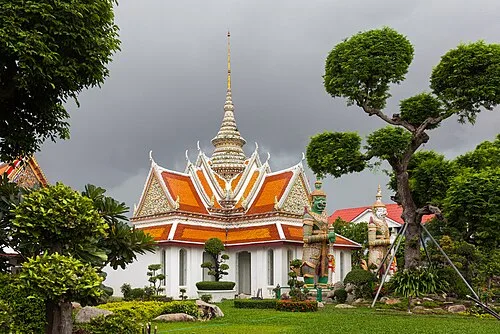
This is the window for first-time sightseeing: the Grand Palace, Wat Pho and Wat Arun in comfort, a Chao Phraya dinner cruise, Chatuchak and a day trip to Ayutthaya. Loy Krathong falls on 24 November 2026, when candlelit baskets float on the river. For the full list of sights, see our guide to the places to visit in Bangkok.
Book flights and hotels two to three months ahead for the November to February peak, when prices climb and the best rooms sell out.
Pack light cotton, a scarf for temple dress codes, sunscreen and a light layer for cool December mornings and strong indoor air-conditioning.
What is Bangkok like in the hot season, March to May?
Hot, dry and increasingly humid, with April the peak. It is cheaper and quieter than the cool season and holds Songkran, the Thai new year.
Highs run about 34 to 36C and it often feels hotter with the humidity, with warm nights at 26 to 27C. March is hazy, and the first heavy storms build towards May. Afternoons outdoors are draining.
Lean on air-conditioned malls such as ICONSIAM and Siam Paragon, Sea Life Ocean World, temples in the early morning, and the Songkran water fights along Silom and Khao San from 13 to 15 April. For cooler-weather ideas to shift indoors, see our list of things to do in Bangkok.
In the hot season, sightsee at opening time, rest indoors at midday, and save the markets and rooftops for the cooler evening.
Pack very light, breathable clothing, strong sunscreen, a refillable water bottle, a hat, and a waterproof pouch for your phone if you join Songkran.
What is the rainy season in Bangkok like, June to October?
The green season brings the lowest prices and the fewest crowds. Rain usually falls in short, heavy afternoon bursts rather than all day, so a planned trip still works.
Expect warm, humid days with afternoon or evening downpours and thunderstorms, and highs of about 33 to 34C with lows near 25 to 26C, a touch cooler than the hot season. Mornings are often dry, and the city turns green and washed between showers. September and October are the wettest, and the flood-prone months.
Keep a morning at the temples, then cooking classes, museums, the Calypso Cabaret and rooftop bars in the drier spells. Chinatown's vegetarian festival usually falls in September or October, filling Yaowarat with meat-free street food.
Pack a compact umbrella or rain jacket, quick-dry footwear, and a dry bag for electronics, and keep sightseeing plans flexible around the rain radar.
When is the worst time to visit Bangkok?
There is no truly bad month, but two windows have real drawbacks: late September to October for rain and flooding, and December to March for air pollution.
- September and October are the wettest months, and heavy rain can flood low-lying streets and slow the traffic to a crawl.
- December to March is Bangkok's PM2.5 haze season, when air quality can turn unhealthy, especially in January and February.
- The April Songkran days are joyful but chaotic, with soaking streets, closed businesses and packed transport.
- The December to February peak is the most expensive and crowded time, so book flights and hotels well ahead.
Bangkok's cool season doubles as its PM2.5 haze season, worst in January and February. If you are sensitive, carry an N95 mask and check the daily AQI.
December is the sweet spot: coolest, driest and most festive, though you pay peak prices and share the temples with the crowds.
What is the best time to visit Bangkok for festivals?
Bangkok's biggest festivals fall in the cool and hot seasons. Timing a trip to one adds an experience no attraction can match, though crowds and prices rise around them.
| Festival | When (2026) | What happens |
|---|---|---|
| Chinese New Year | Around 17 February | Lion dances and food in Yaowarat (Chinatown) |
| Songkran | 13 to 15 April | Citywide water fights for the Thai new year |
| Vegetarian Festival | 10 to 18 October | Nine days of meat-free street food in Chinatown |
| Loy Krathong | 24 November | Candlelit baskets floated on the river |
| New Year countdown | 31 December | Fireworks over the river at ICONSIAM and Asiatique |
How do you plan a Bangkok trip around the weather?
Match your dates to what you want, then plan the day around the heat and rain rather than against them.
- For the best weather, come November to February, and book two to three months ahead for the peak.
- For the lowest prices, travel June to September, and keep temples and cycling for the mornings, moving malls, spas and shows to the wet afternoons.
- In the hot season, sightsee at opening time, rest indoors at midday, and save markets and rooftops for the evening.
- Whatever the month, use the BTS Skytrain, MRT metro and river boats to skip the traffic, which worsens in the rain.
Indian passport holders get 30 days visa-free per visit, cut from 60 days on 15 September 2026, and submit a free Thailand Digital Arrival Card within 72 hours of arrival. Confirm the rule before booking.
Here are Bangkok's monthly averages against what each month suits. To fix dates and hotels in advance, see our Bangkok tour packages, or browse the wider Thailand tour packages by season.
| Month | Avg high | Rain | Verdict for visitors |
|---|---|---|---|
| January | 33C | Very low | Excellent, but peak crowds and some haze |
| February | 34C | Very low | Excellent weather; Chinese New Year in Chinatown |
| March | 35C | Low | Warm and hazy; still fine early in the day |
| April | 36C | Low to moderate | Hottest month; Songkran, but draining heat |
| May | 35C | High | Hot with the first heavy storms |
| June | 34C | Moderate | Green season begins; good value |
| July | 34C | Moderate | Warm with afternoon showers; quiet |
| August | 33C | High | Wet but cheap; short heavy downpours |
| September | 33C | Highest | Wettest month; some street flooding |
| October | 33C | High | Still wet early, improving late month |
| November | 33C | Low | Cool season starts; Loy Krathong |
| December | 32C | Very low | Coolest, driest and festive; busy |
Figures are averages as of October 2026; actual weather varies year to year.
Key Bangkok weather terms
The seasons, festivals and terms used on this page, defined in one line each.
- Cool and dry season: November to February, Bangkok's most comfortable and busiest months.
- Hot season: March to May, the hottest stretch, peaking in April.
- Green or rainy season: June to October, the wettest and cheapest months.
- Songkran: the Thai new year water festival, held 13 to 15 April.
- Loy Krathong: the November festival of floating candlelit baskets, on 24 November 2026.
- PM2.5: fine-particle air pollution that hazes Bangkok from December to March.
- Chao Phraya River: Bangkok's main river, used for express boats and dinner cruises.
- BTS Skytrain and MRT: the elevated train and metro that beat the rain-hit road traffic.
- Thailand Digital Arrival Card (TDAC): the free online arrival form all visitors submit within 72 hours of entry.
FAQs
November to February, the cool and dry season, with sunny days near 32C, low humidity and little rain. It suits temples, markets and river cruises. The trade-off is peak crowds, higher prices and some morning haze, so book flights and hotels ahead if you travel then.
December is often the single best month, with the coolest, driest weather of the year and a festive mood before New Year. January and February are almost as good but can be hazy. For a festival instead, aim for Loy Krathong in November or Songkran in April.
The green season from June to September, when flights and hotels drop and crowds thin out. Rain falls mainly in short afternoon bursts, so mornings are usually fine for sightseeing. August and September offer the lowest prices, with September the wettest month of the year.
April, with average highs near 36C and humidity that makes it feel hotter still. It is also Songkran, so the citywide water fights offer some relief. If you visit in April, sightsee early, rest indoors at midday and carry plenty of water.
June to October, with the heaviest rain in September and October. Showers are usually short and fall in the afternoon or evening rather than all day. Streets in low-lying areas can flood briefly after a downpour, and the traffic slows in the rain.
Yes. Bangkok in the rainy season is cheaper, greener and quieter, and the showers rarely last long. Plan temples and outdoor markets for the morning and keep malls, spas, museums and shows for the wet afternoons. Carry a compact umbrella and keep your plans flexible.
Light, breathable cotton year-round, plus a scarf to cover shoulders and knees at temples. Add sunscreen and a hat for the hot months, and a compact umbrella or rain jacket and a dry bag from June to October. A light layer helps against strong indoor air-conditioning.
No. Indian passport holders now get 30 days visa-free per visit, down from 60 since 15 September 2026, far more than a typical Bangkok trip needs. Pick your dates by weather and festivals, and submit the free Thailand Digital Arrival Card within 72 hours of arrival.