Phuket in September: Weather, Crowds and Things to Do
Phuket in September is usually the wettest and quietest month, with rough 2 to 3 metre seas, Maya Bay and the Similan parks both closed, and hotels at their cheapest. Mornings are often sunny between the storms, so it suits budget travellers after solitude rather than island-hoppers.
Table of Contents
- Is September the wettest month in Phuket?
- Are the islands open in September?
- How rough is the sea in September?
- Is September cheap and quiet in Phuket?
- What are the best things to do in Phuket in September?
- What is on in Phuket in September?
- What should Indian travellers watch out for in Phuket in September?
- Planning a September Phuket trip from India
- Phuket in September: terms worth knowing
- FAQs
| September in Phuket | What to expect |
|---|---|
| Weather | Warm and very wet, highs about 31°C, lows about 25°C |
| Rain | Usually the wettest month, roughly 23 wet days |
| Sea | Roughest of the year, 2 to 3 metre swells, red flags |
| Crowds | The quietest month, very few tourists |
| Prices | The cheapest of the year, tied with August |
| Islands and parks | Maya Bay and Similan both closed until October |
| Ideal for | Budget travellers, solitude, surf, culture |
Figures are averages as of October 2026 and vary year to year.
Is September the wettest month in Phuket?
Yes, September is usually Phuket's wettest month, with rain on most days, though it still tends to fall in afternoon and evening bursts.
Rainfall runs to around 350 mm over roughly twenty-three days, the highest of the year, and sunshine drops to about four and a half hours a day. Days stay warm near 31°C with humidity around 82 percent, and the sea holds at 29°C. Even so, mornings are often bright before the storms build, so an early start still buys dry hours for a boat, a surf or a temple visit.
| Metric | September average |
|---|---|
| Daytime high | about 31°C |
| Night-time low | about 25°C |
| Sea temperature | about 29°C |
| Rainfall | about 350 mm across roughly 23 days |
| Humidity | about 82 percent |
| Sunshine | around 4.5 hours a day |
| Conditions | the wettest month, storms mostly afternoon |
Are the islands open in September?
Most of the big ones are not. Maya Bay is shut until 1 October and the Similan parks until about mid-October.
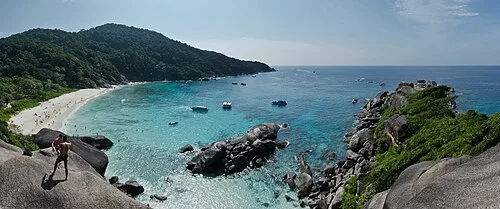
September is the thinnest month for island trips. Maya Bay landings are closed, though Phi Phi day boats still pass the bay and nearby Pileh Lagoon and Bamboo Island stay open. The Similan and Surin dive parks are shut, and Phang Nga Bay runs year-round but in rough seas. Many speedboat trips are cancelled at short notice, so take a morning departure and keep the day flexible.
| Place | Status in September | Foreign-adult fee |
|---|---|---|
| Maya Bay (Phi Phi Leh) | Closed to landings until 1 October | no landing |
| Pileh Lagoon and Bamboo Island | Open for swimming and snorkelling | park fees apply |
| Similan and Surin parks | Closed until about mid-October | closed |
| Phi Phi and Phang Nga trips | Running, often rough and cancellation-prone | tour about 1,200 to 2,500 THB |
How rough is the sea in September?
It is the roughest sea of the year, with 2 to 3 metre Andaman swells and red flags up across the west coast.
Patong, Kata, Karon and Surin face the open sea and run strong rip currents through September, so swimming there is dangerous when the red flag is flying. The surf is at its biggest, which suits experienced surfers and lessons, not casual swimmers. For a calm dip, cross to the sheltered east coast at Panwa and Ao Yon, or use the hotel pool on the roughest days.
Is September cheap and quiet in Phuket?
Yes, it is the quietest and among the cheapest months, with the summer-holiday visitors gone and the peak season still weeks away.
Beaches, roads and restaurants are at their emptiest, and hotels sit at or near their lowest rates of the year, so upmarket resorts are within reach for a fraction of peak prices. The island feels local and unhurried. The Thai baht is worth about 2.8 rupees as of October 2026, and rates move, so set a loose baht budget and keep some aside for weather cover.
Hotel and flight prices are always moving.
What are the best things to do in Phuket in September?
September leans indoors and cultural, with mornings saved for a surf or a boat when the weather allows.
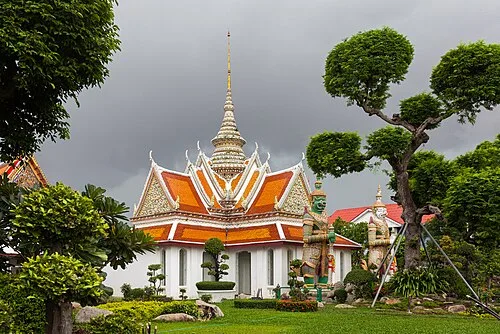
Surf the big swell at Kata with a school, take an early Phang Nga Bay or Pileh Lagoon trip between storms, and fill wet afternoons with the Old Phuket Town shophouses, the Big Buddha, a cooking class, a spa or a cabaret. It is also the cheapest month to book a luxury resort. Our things to do in Phuket (link: /things-to-do-in-phuket) guide lists every activity with its price, and places to visit in Phuket (link: /places-to-visit-in-phuket) covers the beaches and districts.
| Experience | Why September suits it |
|---|---|
| Surf the big swell at Kata | The year's biggest, most consistent waves |
| Morning Phang Nga or Pileh Lagoon trip | Dry hours before the afternoon storms |
| Old Town, a cooking class and a show | Reliable when the rain sets in |
| Cheapest luxury resort stay of the year | Peak-season hotels at rock-bottom rates |
| East-coast beach day at Panwa | Calm water away from the west-coast surf |
What is on in Phuket in September?
September is a quiet month for events, with a Peranakan tradition early on and the famous Vegetarian Festival sometimes starting late.
The month-long Por Tor, or Hungry Ghost, Festival often runs into early September in Old Phuket Town, with offerings and red turtle cakes at the shrines. The Phuket Vegetarian Festival, the island's biggest event, is tied to the lunar calendar and usually falls in October, though in some years it begins in late September. Otherwise the island runs on quiet low-season markets and nightlife.
What should Indian travellers watch out for in Phuket in September?
The rough sea and heavy rain are the main risks in September, with the usual island habits on top. Read these before you go.
September brings the roughest seas of the year, with 2 to 3 metre swells and red flags common on the west coast. Swim only between the flags and keep out of the water when the red flag is up, as the rip currents here are deadly in the monsoon.
- Heavy-rain days: September can bring long wet spells, so do not build a short trip around beach weather and keep the plan flexible.
- Boat cancellations: September's rough seas call off many day trips at short notice, so keep plans loose and insure against cancellations.
- Wet-season roads: frequent downpours make roads slick and cut visibility, so take care on a scooter or avoid one.
- Jet-ski rentals: Patong is known for damage-claim scams, so hire through your hotel and photograph the craft first.
- Getting around: taxis and tuk-tuks seldom run meters, so agree the fare in advance or use the Grab or Bolt apps.
- Temple visits: keep your shoulders and knees covered at the Big Buddha and Wat Chalong, where sarongs are lent at the gate.
- Elephant camps: avoid riding and bathing on welfare grounds and choose an observation-only sanctuary.
- Cannabis and vaping: vapes and e-cigarettes may not be brought into Thailand, and cannabis rules have tightened, so leave them at home.
Planning a September Phuket trip from India
Sort the visa, the arrival card and cancellation cover before you book, and plan a trip that does not depend on the beach.
As of October 2026, Indian passport holders travel to Phuket visa-free for up to 30 days, down from 60 days on 15 September 2026. Direct flights from the south of India reach Phuket International Airport (HKT) in about 4 to 4.5 hours, and northern cities route through Bangkok. September is the cheapest, wettest month, so it rewards flexible travellers who value quiet and price over guaranteed sun.
Complete the free Thailand Digital Arrival Card at tdac.immigration.go.th in the 72 hours before you land.
To plan a low-season trip around the weather, see our Phuket tour packages (link: /phuket-tour-packages). Still weighing the months? Our best time to visit Phuket (link: /best-time-to-visit-phuket) sets September against the rest, and the Thailand tour packages (link: /thailand-tour-packages) are arranged by season.
September is the island at its emptiest and cheapest, bought at the price of the wettest skies and the roughest seas of the year.
Phuket in September: terms worth knowing
A quick glossary of the places, seasons and terms this September guide uses.
- Green season: Phuket's low, wet months from about May to October, the cheapest time to travel.
- Andaman Sea: the sea off Phuket's west coast, at its roughest in September with 2 to 3 metre swells.
- Maya Bay (Phi Phi Leh): the famous Phi Phi bay, closed to landings until it reopens on 1 October.
- Pileh Lagoon: a sheltered Phi Phi Leh lagoon that stays open while Maya Bay is shut.
- Por Tor Festival: the Peranakan Hungry Ghost festival in Old Phuket Town, often running into early September.
- Phuket Vegetarian Festival: the island's biggest event, usually in October but sometimes starting in late September.
- Panwa Beach: a calm east-coast beach, safer for swimming than the west coast in the monsoon.
- HKT, Phuket International Airport: the airport in the island's north, about 32 km from the Patong strip.
- Thailand Digital Arrival Card (TDAC): the free online entry form each visitor completes within 72 hours of arrival.
FAQs
Only for the right traveller. September is the cheapest, quietest and greenest month, good for budget trips, solitude and surfing. But it is usually the wettest month, the seas are the roughest of the year, and Maya Bay and the Similan parks are both closed. If you want beach and island days, wait for November to April; for price and calm, it delivers.
Usually, yes. It averages around 350 mm of rain over roughly twenty-three days, the most of any month, with sunshine down to about four and a half hours a day. The rain still tends to come as afternoon and evening storms rather than all day, so mornings are often bright. Plan the key outings early and keep the afternoons flexible.
Mostly not. Maya Bay is closed to landings until 1 October and the Similan and Surin dive parks until about mid-October. Phi Phi day boats still run and pass Maya Bay, and Pileh Lagoon and Bamboo Island stay open, but seas are rough and many trips are cancelled. Phang Nga Bay runs year-round. Take a morning departure for the best chance of sailing.
Use the sheltered east coast or a pool. The west-coast beaches at Patong, Kata and Karon have the roughest seas of the year, with strong rip currents and frequent red flags, so swimming there is dangerous. Panwa and Ao Yon on the east side are calmer for a dip, and hotel pools are the safe choice on stormy days. The west-coast swell is for surfing only.
It is among the cheapest, tied with August at the bottom of the low season. Hotels, flights and tours sit at or near their yearly lows, and luxury resorts go for a fraction of peak rates. The island is at its quietest. The trade-off is the weather, so put some of the saving toward travel insurance that covers weather cancellations and keep plans flexible.
Maya Bay reopens on 1 October, right after its annual 1 August to 30 September closure, so an early-October trip is the first chance to land there again. In September you can still see the bay from a Phi Phi day boat but cannot step onto the beach. The Similan dive parks follow a little later, reopening around mid-October. Confirm the dates before booking.
No. As of October 2026, Indian passport holders enter visa-free for 30 days, well beyond a September trip. You must file the free Thailand Digital Arrival Card within 72 hours before you land, on the official site only. Carry proof of onward travel and a hotel booking, and recheck the rules near departure, as they change.