The best things to do in Chiang Mai are the Old City temples, Doi Suthep, an ethical elephant sanctuary and a Thai cooking class, with day trips to Doi Inthanon and the Sticky Waterfalls. Most activities cost between free and 2,500 baht, and land sights stay open year-round.
Chiang Mai activities at a glance
A quick read of the headline experiences with rough costs, where they happen and the months each works best. Prices are as of October 2026 and the rupee rate varies.
| Experience | Where | Cost (baht) | Best months | Best for |
|---|---|---|---|---|
| Old City temple walk | Inside the moat | Free to about 50 each | Nov to Feb | First-timers, culture |
| Wat Phra That Doi Suthep | Mountain west of the city | Temple 30 baht | Nov to Feb, mornings | First-timers, views |
| Ethical elephant sanctuary | Mae Taeng and valleys | About 2,400 to 2,500 baht | Nov to Feb | Families, ethical travel |
| Thai cooking class | Old City and Nimman | 1,000 to 1,500 baht | Year-round | Couples, families |
| Doi Inthanon day trip | South of the city | Tour 800 to 1,500 plus 300 fee | Nov to Feb | Nature, families |
| Bua Tong Sticky Waterfalls | Northeast, day trip | Free | Year-round | Families, adventure |
| Sunday Walking Street | Old City | Free to enter | Sunday evenings | Food lovers, shoppers |
| Zipline the jungle canopy | Forests outside the city | 1,500 to 3,900 baht | Year-round | Adventure, families |
What should top your Chiang Mai to-do list?
Twenty-one activities across temples, food, mountains, crafts and festivals, each with its price, where to do it, who it suits and when to go. Prices are as of October 2026.
1. Explore the Old City temples
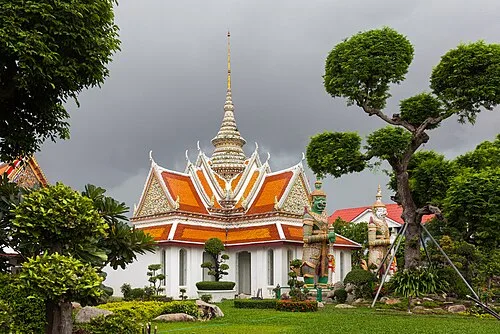
Spend a morning walking between the temples inside the moated Old City, starting with Wat Chedi Luang and its huge ruined brick stupa and Wat Phra Singh with its gilded halls. Dozens more sit within a few blocks. Cover your shoulders and knees, and remove your shoes before entering.
Price: free to about 50 baht per temple; many are free with a donation box. Where: inside the Old City moat. Best for: first-timers and culture seekers. Timings: early morning for cool air and quiet; most open from about 6am.
2. Climb to Wat Phra That Doi Suthep
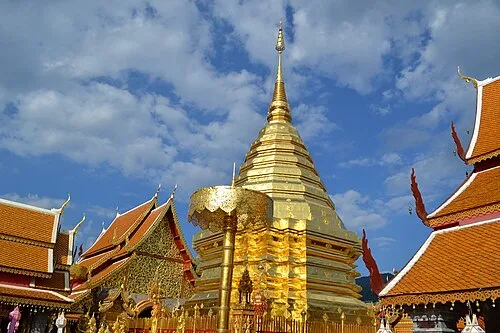
Head up the mountain to Wat Phra That Doi Suthep, the north's most sacred temple, reached by a 306-step serpent staircase to a gold-wrapped central pagoda. The terrace looks over the whole city. A red songthaew from the city zoo runs up and back; go early, before the cloud and the tour buses build.
Price: temple entry 30 baht; songthaew 50 to 100 baht each way. Where: Doi Suthep mountain, about 30 minutes west of the Old City. Best for: first-timers and the widest city view. Timings: from 6am; mornings are clearest.
3. Meet rescued elephants at an ethical sanctuary
Spend a day with rescued elephants at an observation-only sanctuary in the valleys north of the city, walking beside them as they graze and feeding them by hand. There are no rides and no shows. Chiang Mai is the heart of ethical elephant tourism, so choose a camp that lets them roam and skips forced bathing. Book ahead.
Price: about 2,400 to 2,500 baht for a full day. Where: the Mae Taeng and Mae Wang valleys, one to two hours from the city. Best for: families and ethical travellers. Timings: half or full day; book at least a day ahead.
4. Take a Thai cooking class
Learn to cook four or five northern-Thai dishes in a class that usually starts with a market walk to pick the herbs and pastes. You pound your own curry paste, cook at your own wok, then eat what you make. Chiang Mai has the widest choice of cooking schools in Thailand, many on garden farms outside town.
Price: 1,000 to 1,500 baht, market visit included. Where: the Old City, Nimman and farm schools outside town. Best for: couples and families. Timings: morning or evening sessions, four to six hours.
5. Wander the Sunday Walking Street
Come to the Sunday Walking Street, when Ratchadamnoen Road through the Old City closes to traffic and fills with craft stalls, street food and musicians. It is the best market in the north for handmade goods, and temple courtyards along the route open as food halls. Arrive as it opens, since it gets shoulder-to-shoulder by early evening.
Price: free to enter; street dishes 40 to 120 baht. Where: Ratchadamnoen Road, Old City. Best for: shoppers and food lovers. Timings: Sundays, roughly 4pm to 10pm.
6. Browse the Saturday Walking Street
Spend Saturday evening on Wualai Road, the silversmiths' street, which runs its own walking market of jewellery, crafts and food south of the moat. It is quieter and more local than the Sunday market, and the traditional silver quarter is the best place for handmade silverwork. Carry cash and bargain politely.
Price: free to enter; street dishes 40 to 120 baht. Where: Wualai Road, just south of the Old City. Best for: shoppers and a quieter market night. Timings: Saturdays, roughly 4pm to 10pm.
7. Shop the Night Bazaar
Browse the Night Bazaar on Chang Klan Road, the city's nightly market of clothes, souvenirs, art and food courts. Unlike the weekend walking streets, it runs every evening. It is more touristy and less handmade than the walking streets, but handy on a weekday night. Haggle, and compare a few stalls before you buy.
Price: free to enter; food and goods vary. Where: Chang Klan Road, east of the Old City. Best for: a weekday shopping and food night. Timings: nightly, from about 6pm.
8. Zipline the jungle canopy
Clip into a harness and glide between forest platforms on a run of long steel cables, with sky bridges and abseils between the runs. Operators such as Flight of the Gibbon set their courses in old-growth jungle. It is a half-day adrenaline hit in the hills, best if heights excite rather than worry you, with guides handling the gear and safety checks.
Price: 1,500 to 3,900 baht, depending on the number of lines and lunch. Where: forested hills east and north of the city. Best for: adventure seekers and families with older children. Timings: morning and afternoon slots, about half a day.
9. Day-trip to Doi Inthanon
Drive south to Doi Inthanon, the highest mountain in Thailand at 2,565 metres, with cool cloud forest, the twin royal pagodas and the Wachirathan waterfall, and a short nature trail looping the misty summit. It is noticeably cold at the top, so carry a layer. Tours usually add a Karen village and a rice-terrace stop.
Price: guided day tour 800 to 1,500 baht; national park fee 300 baht (plus 100 for the pagodas). Where: Chom Thong district, about 1.5 to 2 hours south. Best for: nature lovers and families. Timings: November to February for clear views; leave early.
10. Cool off at the Bua Tong Sticky Waterfalls
Climb up the Bua Tong Sticky Waterfalls, where the mineral rock grips your feet so you can walk straight up the cascade against the flow. It is a genuinely unusual, free half-day out, and the limestone feels like grippy stone rather than slippery rock. Bring water shoes and a towel, and go on a weekday to beat the crowds.
Price: free. Where: Sri Lanna area, about an hour northeast of the city. Best for: families and anyone after something different. Timings: daytime, year-round; weekdays are quietest.
11. Watch or train Muay Thai
Catch a fight night at Thapae Boxing Stadium, where a live crowd follows the ritual dance and the bouts, with northern cards mixing local fighters and visiting foreigners. Many gyms also run beginner classes if you want to train rather than watch, and ringside seats put you close to the ropes.
Price: stadium seats 400 to 800 baht; a beginner class 300 to 500 baht. Where: Thapae and Kalare stadiums near the Night Bazaar. Best for: adults and sports fans. Timings: scheduled fight nights, several evenings a week.
12. Join a monk chat or meditation session
Sit down for a monk chat at Wat Chedi Luang or Wat Suan Dok, where student monks answer questions about Buddhism and daily life in exchange for a chance to practise English. Some temples run longer meditation retreats. It is free, genuine and a calm counterweight to the markets, so dress modestly and speak quietly.
Price: free for a monk chat; retreats priced separately. Where: Wat Chedi Luang in the Old City; Wat Suan Dok to the west. Best for: culture seekers and slow travellers. Timings: set afternoon hours; check the temple board.
13. Trek to a hill-tribe village
Take a one or two day trek into the hills north of the city, walking through forest and rice terraces to Karen or Lahu villages, often with a waterfall and a bamboo-rafting stretch, and overnight treks sleeping in a village homestay. Choose a small-group, fair operator that pays the villages properly, and wear broken-in shoes.
Price: 800 to 1,500 baht for a day; overnight treks more. Where: the hills north and west of the city. Best for: active travellers and small groups. Timings: November to February for cool, dry walking.
14. Visit Wat Umong, the tunnel forest temple
Walk the ancient brick tunnels of Wat Umong, a 700-year-old forest temple at the foot of Doi Suthep, wrapped in trees with a lake, a stupa and resident monks. It feels a world away from the Old City, and the shaded grounds and tunnels stay cool in the heat. Feed the lake fish and turtles, and dress modestly.
Price: free; a small donation is welcome. Where: at the base of Doi Suthep, west of the Old City. Best for: culture seekers and a quiet afternoon. Timings: daytime; mornings are calmest.
15. Sip coffee and eat in Nimman
Spend a few hours in Nimmanhaemin, the university and cafe district, which has the best coffee scene in Thailand along with design shops, brunch spots and the One Nimman plaza. Northern Thailand grows its own arabica. It is walkable and good on a rest day or a rainy afternoon, with prices a little higher than the Old City but still cheap.
Price: coffee from about 60 baht; meals vary. Where: Nimmanhaemin, west of the Old City near the university. Best for: couples, remote workers and coffee lovers. Timings: daytime and evenings.
16. Day-trip to the White Temple in Chiang Rai
Take a long day trip north to Chiang Rai for its striking modern temples: the mirror-white Wat Rong Khun, the deep-blue Wat Rong Suea Ten and the Black House. They look like nothing else in Thailand. It is about three hours each way, so start early or stay a night; tours usually add the Golden Triangle and a hot spring.
Price: guided day tour 800 to 1,500 baht; White Temple entry about 100 baht. Where: Chiang Rai, about 3 hours north. Best for: culture seekers and photographers. Timings: a full day; leave by 7am, or make it an overnight.
17. Ride the 762 curves to Pai
Head northwest to Pai, a laid-back mountain town reached by a winding road with 762 marked curves. Once there, the pace drops to waterfalls, hot springs, a canyon and slow cafe days. The road tests weak stomachs, so carry motion-sickness tablets, and stay a night or two rather than rushing it as a day trip.
Price: shared minibus about 150 to 200 baht each way. Where: Pai, about 3 hours northwest by the mountain road. Best for: couples and slow travellers. Timings: November to February; the road is worst in heavy rain.
18. Swim at the Grand Canyon Chiang Mai
Cool off at the Grand Canyon in Hang Dong, a flooded old quarry with turquoise water where you can swim, cliff-jump or try the floating water park. It is a popular hot-day escape south of the city. Life jackets are required for the deep water, and weekdays are quieter than the weekend local crowd.
Price: entry about 50 to 100 baht; the water park costs extra. Where: Hang Dong, about 30 minutes south. Best for: families with teenagers and groups. Timings: daytime; hottest months are busiest.
19. See the Bo Sang umbrella village
Drive out to Bo Sang, the handicraft village east of the city famous for its painted paper and silk umbrellas, and the neighbouring San Kamphaeng silk and silver workshops. You can watch the umbrellas being made and painted. It is a good half day for crafts and souvenirs away from the markets.
Price: free to wander; crafts priced individually. Where: Bo Sang and San Kamphaeng, east of the city. Best for: shoppers and craft lovers. Timings: daytime, weekdays are quietest.
20. Raft or ride an ATV in the Mae Taeng valley
Get out into the Mae Taeng valley for white-water rafting on the river, an ATV ride through the hills, or bamboo rafting on the calmer stretches. Operators bundle these with the elephant sanctuaries nearby. The rafting is at its wildest in the rainy months, so check the grade if you are nervous, and wear clothes you do not mind getting muddy.
Price: 800 to 2,000 baht depending on the activity. Where: the Mae Taeng valley, about an hour north. Best for: adventure seekers and families with teenagers. Timings: rafting is biggest in the wet months; ATV runs year-round.
21. Time it for Yi Peng and Loy Krathong
Match your dates to Chiang Mai's lantern festival and you get the city at its most magical, when thousands of paper lanterns rise into the night and candlelit baskets float on the moat and river. Songkran in April is the other big draw. The mass lantern releases are ticketed and book out early, but the free city celebrations are just as memorable.
Price: free to join the city celebrations; ticketed lantern-release events cost much more. Where: across the city, the moat and the Ping River. Best for: couples and a special trip. Timings: Yi Peng and Loy Krathong 23 to 25 November 2026; Songkran 13 to 15 April.
What are the best things to do in Chiang Mai at night?
Chiang Mai after dark centres on the walking-street markets, the Night Bazaar, Muay Thai and the Nimman bars rather than big clubs.
- The Sunday and Saturday Walking Streets for crafts and food, on their nights.
- The Night Bazaar on Chang Klan Road, every evening.
- A Muay Thai fight at Thapae Stadium.
- Nimman bars, live music and rooftop spots for a quieter night.
- A lantern release during the November Yi Peng festival.
What can you do in Chiang Mai with family?
Families do best mixing one temple and one elephant day with the waterfalls, a cooking class and a canyon or zipline so children stay happy.
- An observation-only elephant sanctuary, no rides.
- The Bua Tong Sticky Waterfalls, safe to climb.
- A Doi Inthanon day trip for cool air and easy trails.
- The Grand Canyon Chiang Mai for swimming and the water park.
- A cooking class and the Sunday Walking Street food halls.
What can couples do in Chiang Mai?
Couples lean to the temples, cafes, mountains and festivals rather than the busy markets.
- Sunrise at Doi Suthep before the tour buses.
- A slow coffee-and-brunch day in Nimman.
- An overnight in the mountains at Pai or Mae Kampong.
- A lantern release together during Yi Peng in November.
What are the most unique things to do in Chiang Mai?
For a trip beyond the temples, these show a different side of the north.
- Walking up the grippy Bua Tong Sticky Waterfalls.
- A monk chat and a temple meditation session.
- The Yi Peng lantern release in November.
- A one or two day hill-tribe trek with a village homestay.
What are the free things to do in Chiang Mai?
Several of the city's best experiences cost nothing beyond food and transport.
- Most Old City temples and Wat Umong, free with a donation box.
- A monk chat at Wat Chedi Luang or Wat Suan Dok.
- The Bua Tong Sticky Waterfalls.
- The Sunday and Saturday Walking Streets, free to browse.
- Wandering Nimman and the Old City moat and gates.
When is the best time for each activity?
November to February is the cool, dry, clear season and suits everything. March and April bring crop-burning haze that hides the mountains, and June to October is the green rainy season with fuller waterfalls. For the full calendar, see our guide to the best time to visit Chiang Mai.
| Season | Months | Great for | Watch out |
|---|---|---|---|
| Cool and dry | Nov to Feb | Temples, treks, mountains, Doi Inthanon views | Busiest; book elephant camps and Yi Peng early |
| Burning season | Mar to Apr | Cheaper stays, Songkran | Smoke haze hides views and can affect breathing |
| Green and wet | Jun to Oct | Full waterfalls, rafting, lush hills | Afternoon rain; some trek trails muddy |
| Festival dates | 23 to 25 Nov; 13 to 15 Apr | Yi Peng lanterns; Songkran | Both book out; prices jump |
Go up Doi Suthep and Doi Inthanon early, before the afternoon cloud and, in the hot months, the burning-season haze build and the tour buses arrive.
How much do things to do in Chiang Mai cost?
Temples, waterfalls and monk chats are free or near-free, while elephant days, day trips and ziplines sit at the top end. Figures are as of October 2026 and the rupee rate varies.
| Activity or fee | Cost (baht) | Approx rupees |
|---|---|---|
| Old City temples | Free to about 50 | Free to about 135 |
| Wat Phra That Doi Suthep | 30 | about 80 |
| Ethical elephant sanctuary | 2,400 to 2,500 | about 6,480 to 6,750 |
| Doi Inthanon national park fee | 300 (plus 100 pagodas) | about 810 |
| Thai cooking class | 1,000 to 1,500 | about 2,700 to 4,050 |
| Zipline canopy tour | 1,500 to 3,900 | about 4,050 to 10,530 |
| Chiang Rai White Temple day tour | 800 to 1,500 | about 2,160 to 4,050 |
For a full trip budget by duration, see our Chiang Mai tour packages or the wider Thailand tour packages
What should Indian visitors watch out for in Chiang Mai?
The scams, rules and seasonal points that catch first-time Indian visitors, each with what to do instead.
From March to April crop fires haze the north, hiding the mountains and irritating the lungs. Carry a mask, check the daily AQI, or come November to February.
- Elephant rides and shows: riding harms the animals, and Chiang Mai still has camps that offer it. Choose an observation-only sanctuary with no riding or forced bathing.
- Tuk-tuk and songthaew overcharging: fares are not metered. Agree the price first, use the Grab app, or take shared red songthaews for cheap short hops.
- Temple dress code: cover shoulders and knees at every temple, including Doi Suthep, or you will be turned away. Carry a light scarf.
- Trek operators: some overcrowd villages and treat them as a spectacle. Book a small-group, fair-trade operator that pays the communities.
- Cannabis and vapes: recreational cannabis moved to medical-only in June 2025, and vapes are banned outright, so avoid both.
- Lantern safety at Yi Peng: sky lanterns near the airport flight path are restricted. Release them only where permitted, and never near power lines.
Key Chiang Mai activity terms
The named places and terms used on this page, defined in one line each.
- Chiang Mai Airport (CNX): the city's airport, about 10 to 15 minutes from the Old City.
- Old City: the square, moated historic centre where most temples sit.
- Wat Phra That Doi Suthep: the gold-pagoda mountain temple west of the city.
- Wat Chedi Luang: the Old City temple with a huge ruined stupa, and a monk chat.
- Doi Inthanon: the highest mountain in Thailand, a day trip south of the city.
- Bua Tong Sticky Waterfalls: mineral falls you can walk up, northeast of the city.
- Yi Peng: the northern lantern festival, held with Loy Krathong on 23 to 25 November 2026.
- Nimman (Nimmanhaemin): the cafe, design and university district west of the Old City.
- Songthaew: the shared red pickup taxi that runs fixed and negotiated routes.
- Songkran: the Thai new year water festival, 13 to 15 April, huge in Chiang Mai.
FAQs
The Old City temples, Wat Phra That Doi Suthep, an ethical elephant sanctuary, and a Thai cooking class. Day trips to Doi Inthanon, the Bua Tong Sticky Waterfalls and Chiang Rai's White Temple, plus the Sunday Walking Street, round out a first visit.
An observation-only elephant sanctuary, the Bua Tong Sticky Waterfalls, a Doi Inthanon day trip, the Grand Canyon swimming spot and a cooking class. The Sunday Walking Street food halls and a zipline for older children round out an easy family week, with cooler weather making daytime sightseeing comfortable.
Chiang Mai is one of the safest cities in Thailand, with low crime and an easy pace. The main issues are seasonal smoke haze in March and April, scooter accidents on busy roads, and unmetered songthaew fares. Use Grab, agree fares first, and check air quality if you visit in burning season.
Yes. Chiang Mai has a strong vegetarian and vegan scene, especially around Nimman and the Old City, and several Indian restaurants. Northern Thai food uses less coconut and more herbs. Say jay for strict vegetarian and mangsawirat for vegetarian, and mai phet for not spicy.
Browse the Sunday or Saturday Walking Street for crafts and food, shop the nightly Night Bazaar, watch a Muay Thai fight at Thapae Stadium, or have a quieter evening in the Nimman bars. In November, a lantern release during Yi Peng is the highlight.
Chiang Mai suits first-timers who want temples, mountains, ethical elephants and cooler weather over beaches. It pairs well with Bangkok and one southern island for a first trip. If your priority is sand and sea, base in the south instead and add Chiang Mai as a three-day northern leg.