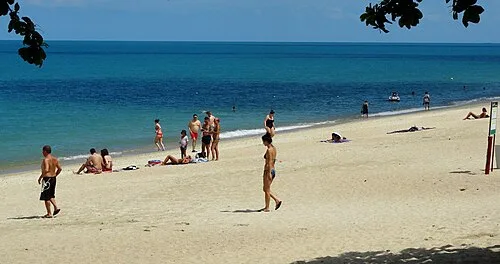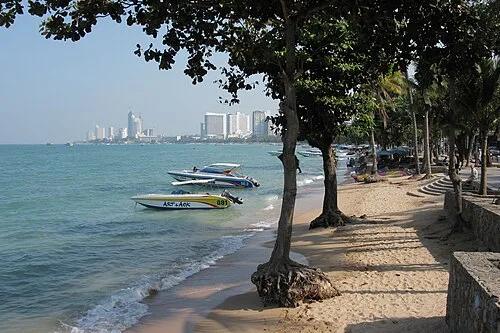
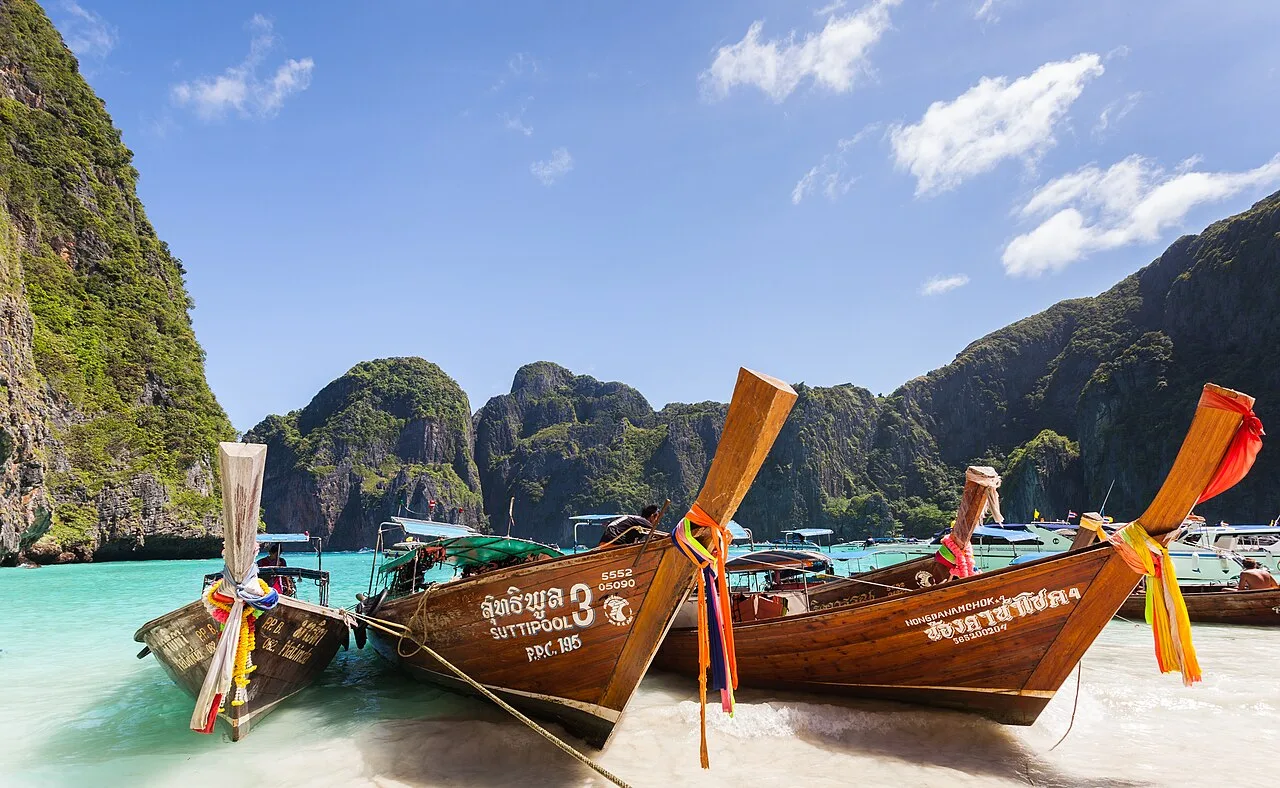
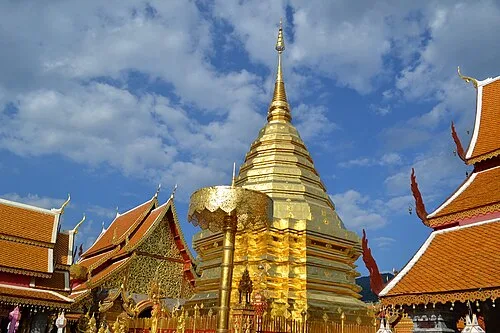
The islands in Thailand split across two coasts with opposite rainy seasons. The Andaman side, including Phuket, Phi Phi and the Similans, is best from November to April. The Gulf side, including Samui, Phangan and Tao, stays drier from January to September. Choose by coast first, then by month.
Table of Contents
- Which coast should you pick: the Andaman Sea or the Gulf?
- Andaman Sea (West Coast)
- Gulf Islands Thailand (East Coast)
- Which islands in Thailand are best for couples, families and first-timers?
- What is the best time to visit the Thai islands?
- How do you reach the islands from India?
- What should Indian travellers know before they go?
- Key Thailand islands terms
- FAQs
Which coast should you pick: the Andaman Sea or the Gulf?
Thailand has two island coasts with opposite weather. The Andaman Sea in the west runs dry from November to April; the central Gulf in the east runs dry from roughly January to September. Your travel month decides the coast more than any beach photo does.
Most first-time plans go wrong at this one decision. Thailand sits in the path of two monsoons, and its two island coasts catch them at different times of the year.
The Andaman coast faces southwest. From roughly May to October it takes the southwest monsoon, which brings heavier rain, bigger swell and more ferry cancellations. Phuket, Krabi, Phi Phi, Koh Lanta, Koh Lipe and the Similan Islands all sit here. Their settled, calm-sea window is November to April.
The central Gulf islands, Koh Samui, Koh Phangan and Koh Tao, run on a different clock. They stay fairly dry and bright from January to September, with a useful sunny patch in June to August when the Andaman is wet. Their wettest stretch is October to December, and November is the month to be wary of.
There is a third group, the eastern Gulf islands near Trat: Koh Chang, Koh Kood and Koh Mak. These behave more like the Andaman coast, dry from November to April and wet from May to October.
So if you are travelling in July, you want Samui, not Phuket. If you are travelling in December, you want Phuket or Krabi, not Koh Chang. Fix the month, then read the sections below.
Andaman Sea (West Coast)
The Andaman islands sit off Phuket and Krabi on Thailand's west coast. Best from November to April, they offer limestone cliffs, clear water and the country's best diving at the Similans. Seas turn rough and some parks close from May to October.
Phuket (HKT)
Phuket is the largest island and the one most Indians fly into first. It is joined to the mainland by the Sarasin Bridge, so you drive on rather than take a boat. You get direct flights, big resorts, hospitals, malls, a long list of beaches and a working base for day trips to Phi Phi, James Bond Island and the Similans. Patong is the loud, nightlife-heavy stretch. Kata, Karon, Kamala, Bang Tao and Nai Harn are calmer and better for couples and families.
Best time: November to April for calm seas and sun. May to October brings surf and rip currents on the west-facing beaches, when red-flag warnings are common.
How to reach: Direct flights from Delhi, Mumbai and other metros to Phuket International Airport (HKT), or a short domestic hop from Bangkok (BKK or DMK). Phuket works as your arrival point for the whole Andaman coast.
Koh Phi Phi
Phi Phi is the postcard, and it is busy. The main island, Phi Phi Don, has the bars, boats and guesthouses; uninhabited Phi Phi Leh holds Maya Bay, the beach from the film. Maya Bay now has timed-entry rules, periodic closures and a no-swimming zone in parts to protect the reef, so do not count on a quiet beach there. Come for the longtail boat tours, snorkelling and viewpoint hike, not for solitude.
Best time: November to April. Day-trip boats thin out and get bumpy in the May to October monsoon.
How to reach: Ferry from Phuket's Rassada Pier, about 1 hour 30 minutes to 2 hours, or from Krabi (Klong Jilad Pier) in a similar time. Speedboats cut it to roughly 45 to 50 minutes but cost more and are rougher in swell.
Koh Lanta
Lanta is the Andaman coast's calm, long-stay island. It is two connected islands, flat enough to ride end to end on a scooter, with wide west-facing beaches, a laid-back old town and an easy-going mix of families and long-stay couples. It is reached by road now, so it is simpler to get to than it used to be.
Best time: November to April. Much of the island goes quiet in the May to October low season, with some restaurants and the Krabi marine-park snorkel trips pausing.
How to reach: From Krabi airport (KBV) by minivan, about 2 hours, crossing two short car ferries that run through the day. High-season speedboats also link Lanta to Phuket, Phi Phi and Koh Lipe from roughly November to April.
Similan Islands
The Similans are a protected marine national park off Phang Nga, rated among the best dive and snorkel sites in Southeast Asia for their clear water and granite boulders. There are no hotels; you visit on a day trip or a liveaboard dive boat, and the park opens for only part of the year.
Best time: The park runs on a fixed season. For 2026 to 2027 it reopens on 15 October 2026 and closes around 15 May 2027. It is shut roughly 16 May to 14 October.
How to reach: Day-trip speedboats leave from Thap Lamu Pier near Khao Lak, about 1 to 1.5 hours each way. Most visitors base in Khao Lak or Phuket (about a 1.5-hour drive from HKT to the pier). Park entry is about ฿500 for foreign adults and ฿250 for children aged 3 to 14.
Koh Lipe
Lipe is the far south of the Andaman coast, near the Malaysian border, and the reward for the extra travel is softer sand and clearer water than the busier islands up north. It is small, walkable, built around a strip called Walking Street, and fringed by reef you can swim to from the beach.
Best time: November to April. In the May to October monsoon many ferries stop and most places wind down, so Lipe is close to a dry-season-only island.
How to reach: Speedboat from Pak Bara Pier in Satun, about 1.5 hours. Reach Pak Bara from Hat Yai airport (HDY) or Trang airport (TST) by road, roughly 1.5 to 2 hours. In high season, ferries also run from Phuket, Krabi, Phi Phi and Lanta.
Gulf Islands Thailand (East Coast)
The Gulf islands sit on Thailand's east side. The central trio, Samui, Phangan and Tao, stay dry from January to September and suit a June-to-August trip when the west coast is wet. The eastern Trat islands, Koh Chang, Kood and Mak, follow the opposite, November-to-April calendar.
Koh Phangan
Phangan is two islands in one. Haad Rin in the south hosts the monthly Full Moon Party, a beach rave that pulls thousands; the rest of the island is quiet beaches, jungle viewpoints, yoga retreats and wellness resorts. Pick your side of the island to match the trip you actually want.
Best time: January to September, with June to August a strong window. October to December is the wettest stretch. Note that the Full Moon Party runs year-round, timed to the lunar calendar.
How to reach: Ferry from Koh Samui, about 30 to 45 minutes, or from Surat Thani on the mainland. Fly into Samui (USM) or Surat Thani (URT) first, then cross by boat.
Koh Samui (USM)
Samui is the Gulf's main island and the easiest to reach, with its own airport and the widest spread of hotels, from family resorts with kids' clubs to honeymoon villas. It has calmer, more sheltered beaches than Phuket in the right season, plus hospitals, restaurants and day trips to Ang Thong Marine Park.
Best time: January to September. The wettest months are October to December, with November the peak of the rain.
How to reach: Direct domestic flights into Koh Samui Airport (USM), mostly from Bangkok, or the cheaper route of flying to Surat Thani (URT) and taking a bus-and-ferry combination to the island. There are no direct flights from India, so you connect through Bangkok.
Koh Tao
Tao is Thailand's diving school. It is where most backpackers do their first certification, because the courses are among the cheapest in the world and the shallow bays are easy to learn in. It is small, young in feel and good value, with snorkelling off the beach and a short boat hop to Koh Nang Yuan.
Best time: January to September. October to December is wet and the crossing can get rough.
How to reach: High-speed ferry from Koh Samui or Koh Phangan, about 1 to 1.5 hours, or from Chumphon on the mainland (CJM airport nearby), about 1.5 to 2 hours. Tao has no airport, so you always arrive by boat.
Koh Chang
Koh Chang is Thailand's second-largest island, in the far east near Trat, and it is the closest big island to Bangkok by road. It is green and hilly, with waterfalls, a national park and a mix of beaches that run from lively Lonely Beach to quiet bays in the south. It suits travellers who want nature and beaches without a long flight south.
Best time: November to April. The May to October monsoon brings the island's heaviest rain.
How to reach: Fly to Trat airport (TDX) from Bangkok, about 1 hour, then a ferry from the Laem Ngop piers, roughly 30 to 45 minutes. Alternatively it is about a 5 to 6 hour bus or car journey from Bangkok to the pier.
Koh Kood and Koh Mak
These two sit beyond Koh Chang and are the quiet end of the eastern Gulf. Koh Kood has clear water, waterfalls and a slow, low-rise feel with few roads. Koh Mak is flat, tiny and friendly, good for cycling and easy swimming. Both are for travellers who want to switch off rather than go out.
Best time: November to April. Service is thinner in the May to October low season, and the inter-island boats between Chang, Kood and Mak stop running from early May to mid-October, so you island-hop via the mainland in that window.
How to reach: Speedboat or ferry from Laem Sok Pier near Trat. Koh Kood is about 1 to 1.5 hours; Koh Mak is about 45 minutes to 1 hour. Fly into Trat (TDX) first.
Which islands in Thailand are best for couples, families and first-timers?
No single island wins for everyone. Couples lean to Lanta and Koh Kood, families to Samui and Phuket, first-timers to Phuket and Samui, party-goers to Phangan, and divers to Koh Tao and the Similans. The table below matches the island to traveller.
Best Thailand islands by traveller type
| Traveller type | Top picks | Why it fits | Skip it if |
|---|---|---|---|
| Couples and honeymooners | Koh Lanta, Koh Kood | Quiet beaches, sunsets, low-rise resorts and few crowds | You want nightlife and plenty to do after dark |
| Families | Koh Samui, Phuket | Direct or easy flights, kids' clubs, calmer beaches, hospitals and malls close by | You want a remote, undeveloped island |
| First-timers | Phuket, Koh Samui | Simple to reach, English widely spoken, everything organised and easy to day-trip from | You want to get off the tourist track |
| Party and nightlife | Koh Phangan, Phuket (Patong) | Full Moon Party, beach bars and clubs | You are travelling with young children |
| Diving and snorkelling | Koh Tao, Similan Islands | Cheap certification and easy bays on Tao, world-class reefs at the Similans | You need shopping, nightlife or a long hotel list |
What is the best time to visit the Thai islands?
There is no single best month for all of Thailand. The Andaman and eastern Gulf coasts are best from November to April; the central Gulf is best from January to September. Match the table below to your travel dates.
Island seasons by coast
| Coast and islands | Best months | Rainy months | What to watch |
|---|---|---|---|
| Andaman (Phuket, Phi Phi, Lanta, Lipe, Similan) | November to April | May to October | Similan and Surin parks shut roughly 16 May to 14 October; west-coast surf and rip currents in the wet months |
| Central Gulf (Samui, Phangan, Tao) | January to September (driest June to August) | October to December | November is the wettest; good choice when the Andaman coast is rainy |
| Eastern Gulf (Koh Chang, Koh Kood, Koh Mak) | November to April | May to October | Inter-island boats between Chang, Kood and Mak stop early May to mid-October |
Prices and crowds peak from mid-December to mid-January and again around Chinese New Year. For good weather with lower rates, aim for November or late April on the Andaman coast, or June to early September on the central Gulf.
How do you reach the islands from India?
Most trips start with a flight to Bangkok, Phuket or Koh Samui, then a short domestic flight or a ferry. Phuket has direct flights from several Indian cities; the Gulf islands connect through Bangkok.
For the Andaman islands, fly direct to Phuket (HKT) from Delhi, Mumbai, Bengaluru and other metros, or route through Bangkok. Phuket is your hub for Phi Phi, Lanta, the Similans and Krabi's islands. For Krabi-side islands you can also fly into Krabi (KBV).
For the central Gulf islands, fly to Bangkok (BKK or DMK) first. From there, take a domestic flight to Koh Samui (USM) and ferry onward to Phangan or Tao, or fly to Surat Thani (URT) for the cheaper bus-and-ferry route. Samui has no direct flights from India.
For the eastern Gulf islands, fly to Bangkok, then take the short flight to Trat (TDX) or drive 5 to 6 hours to the Laem Ngop and Laem Sok piers for Koh Chang, Koh Kood and Koh Mak.
Ferry fares are modest. A mainland-to-island crossing typically runs about ฿300 to ฿700 one way (roughly ₹750 to ₹1,750), with speedboats costing more than slow ferries. Book the first and last crossings of your trip in advance in high season, and keep a buffer day before your international flight in case the monsoon delays a boat.
You will find our detailed route notes useful in the Phuket tour packages, Krabi tour packages and Koh Samui tour packages, each of which pairs the island with its transfers.
What should Indian travellers know before they go?
Indians get 30 days visa-free as of September 2026, must file the free Thailand Digital Arrival Card, and should plan for a handful of common scams, local laws and safety points. The bullets below cover the essentials.
Entry and money:
- Visa: Indian ordinary passport holders can enter Thailand visa-free for up to 30 days per stay. This replaced the earlier 60-day allowance from 15 September 2026, per the Royal Thai Embassy in New Delhi. One 30-day extension is possible at an immigration office for about ฿1,900.
- Arrival card: The Thailand Digital Arrival Card (TDAC) is required and free. File it online within 72 hours before you land and carry the QR confirmation.
- Tourist fee: A proposed 300-baht arrival levy was not in force as of October 2026.
- Money: Carry some cash for island piers and small resorts, where cards are not always taken. At roughly ₹2.5 to the baht, a simple island day runs far cheaper than a European beach, though peak-season resorts are not.
Scams and overcharging to expect, with the safer move:
- Jet-ski damage scam: operators claim you damaged a machine and demand thousands of baht. Avoid renting jet skis; photograph any rental in full before you ride, and pay by a traceable method.
- Taxi and tuk-tuk overcharging: on the islands, meters are often "broken". Agree the fare first, or use a ride app in Phuket and Samui.
- "Island or temple is closed" line: a tout tells you a site is shut and offers an alternative tour for a commission. Check official hours yourself.
- Boat-tour overloading: in the wet season, some operators run day trips in marginal weather. Skip boat days when the sea looks rough, and favour operators who give life jackets.
Laws and etiquette that trip up visitors:
- Cannabis and vaping: cannabis is sold openly but its legal status has tightened, and recreational use rules carry real penalties; e-cigarettes and vapes are banned to bring in and to use, with fines or worse. Leave vapes at home.
- Dress code: cover shoulders and knees at temples. Nudity and topless sunbathing are not acceptable on Thai beaches.
- Respect for the monarchy and images of the Buddha is taken seriously in law; do not treat Buddha images as decoration or souvenirs.
Wildlife and reef ethics, with a better option:
- Skip elephant rides and any show where elephants paint or perform; the training behind them is cruel. Choose an ethical sanctuary that lets you watch and feed rather than ride.
- Avoid tiger selfie attractions. There is no humane version of a chained big cat.
- Do not touch or stand on coral, and do not feed fish. Wear reef-safe sunscreen and keep a snorkel distance.
For the full picture, read our guide to the best time to visit Thailand and the current Thailand visa for Indians before you book.
The Andaman beaches look calm but carry strong rip currents in the May to October monsoon. Several tourists drown each year ignoring red flags on Phuket's west coast. If a red flag is flying or the beach has no lifeguard, do not swim out, however gentle the water looks.
Key Thailand islands terms
A quick reference to the named places and rules that come up most when planning an island trip.
- Andaman Sea: Thailand's western coast, home to Phuket, Krabi, Phi Phi, Lanta, Lipe and the Similans; dry season November to April.
- Gulf of Thailand: the eastern sea holding Samui, Phangan, Tao in the centre and Koh Chang, Kood and Mak in the east.
- Similan Islands National Park: a protected Andaman dive archipelago off Phang Nga, open only about mid-October to mid-May.
- Mu Ko Ang Thong: a 42-island marine park reached on day trips from Koh Samui and Koh Phangan.
- Maya Bay: the Phi Phi Leh beach from the film, now under timed entry and periodic closure to protect the reef.
- Sarasin Bridge: the road bridge that connects Phuket to the mainland, so Phuket is reached by car, not boat.
- TDAC: the Thailand Digital Arrival Card, a free online entry form every visitor files within 72 hours of arrival.
- Thai baht (THB): Thailand's currency, roughly ₹2.5 to the baht in October 2026; rates vary.
FAQs
Phuket is the easiest first island. It has direct flights from India, hospitals, English-speaking staff, every budget of hotel and day trips to Phi Phi and the Similans. If you want calmer, more sheltered beaches and a shorter list of decisions, Koh Samui is the Gulf-coast equivalent, though you connect through Bangkok to reach it.
Indian passport holders can enter Thailand visa-free for up to 30 days as of September 2026, down from the earlier 60 days. You must file the free Thailand Digital Arrival Card online within 72 hours before arrival and carry the QR confirmation. Rules change often, so confirm with the Royal Thai Embassy before you book.
For clear water with less crowding, Koh Lipe in the far south and Koh Kood in the east stand out. The Similan Islands have the clearest water of all, but only on a day trip or liveaboard and only in the open season. Phi Phi is beautiful but busy, and Maya Bay is restricted.
Not quickly. The two coasts are on opposite sides of the Thai peninsula, so hopping from Phuket to Koh Samui means a flight or a long overland transfer, usually via Bangkok or Surat Thani. Most trips stay on one coast. Combine Phuket, Phi Phi and Krabi on the Andaman side, or Samui, Phangan and Tao on the Gulf side.
Avoid the Andaman coast from May to October, when seas are rough and the Similan park is shut. Avoid the central Gulf, Samui and Phangan, in October to December, when rain peaks around November. The eastern islands of Koh Chang, Kood and Mak are wet from May to October, when inter-island boats stop.
Plan at least five to six nights on the islands to make the flights worthwhile, which gives you one main island plus a day trip or a second island. For two islands at a relaxed pace, or a dive course on Koh Tao, allow eight to ten nights. Keep a buffer night before your flight home in the wet season.
Yes. Koh Samui and Phuket have family resorts, calm beaches and hospitals, and most tourist areas have Indian and vegetarian restaurants, with Jain and no-onion-garlic options in Phuket and Patong. Smaller islands have fewer Indian options, so a family with strict dietary needs is easier served on the larger islands.
Mostly, but respect the flags. Andaman beaches have strong rip currents in the monsoon, and red flags mean do not enter the water. Many beaches have no lifeguard. Stick to sheltered bays in rough weather, keep children within reach, and do not swim after drinking or at unlit beaches at night.