The best time to visit Chiang Mai is November to February, the cool, dry season, with clear skies, cold mornings and the Yi Peng lantern festival. March to May is hot, with crop-burning haze at its worst in March. June to October is the green season, cheap and lush, with rain in short afternoon bursts.
Chiang Mai's seasons at a glance
Chiang Mai sits inland in the mountains of northern Thailand, so it has no coastal monsoon and its own quirks: genuinely cold winter mornings, fierce April heat, and a smoky burning season the beaches never see.
| Months | Season | Temperature | Weather | Ideal for / avoid |
|---|---|---|---|---|
| November to February | Cool and dry | 15 to 30C | Sunny and clear, cold mornings, no haze | Best for touring and festivals; peak crowds and prices |
| March to May | Hot and hazy | 22 to 40C | Very hot, crop-burning haze in March and April | Cheaper, but avoid March for air quality |
| June to October | Green (rainy) | 24 to 33C | Short afternoon showers, lush hills, wettest Aug and Sep | Cheapest and greenest; occasional heavy downpours |
- Nights are genuinely cold for Thailand; the city drops to 10 to 15C, and Doi Inthanon mornings can fall near 3C.
- March and April are the worst months, when crop-burning haze fouls the air and hides the mountains.
- April is also the hottest, near 40C, and hosts one of Thailand's biggest Songkran celebrations.
- Yi Peng and Loy Krathong fall on 23 to 25 November 2026, peaking around the 24th, and paid lantern releases sell out months ahead.
What is the weather like from November to February?
The cool, dry season is the best time to visit Chiang Mai, with sunny days, clear mountain views and no haze. It is peak season, so hotels and flights cost more and the festivals draw crowds, but the weather is the finest of the year.
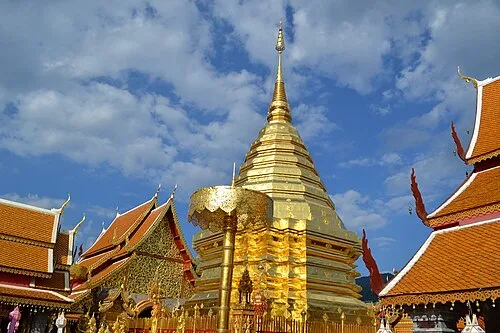
Daytime highs run about 28 to 30C, with city nights dropping to 10 to 15C and mountain mornings far colder; Doi Inthanon can near freezing. This is the window for Wat Phra That Doi Suthep, the Old City temples, the Sunday Walking Street, Doi Inthanon and the Yi Peng lanterns at Tha Phae Gate in November. For the full list of sights, see our guide to the places to visit in Chiang Mai.
To see Yi Peng, plan around 24 November 2026 and book paid mass-lantern releases months ahead, as they sell out; the free Tha Phae Gate release is an alternative.
Pack light clothes for the day plus a warm layer and a jacket for cold mornings and evenings, walking shoes, and a scarf for temple dress codes.
What is March to May like in Chiang Mai?
The hot season brings fierce heat and, in March and April, the north's crop-burning haze, the single biggest reason to think twice about these months. Prices and crowds fall, but the air and the temperature both work against you.
Highs run about 34 to 36C, up to 40C in April, the hottest month, and heavy smoke from field and forest burning hangs over March and often April before the first May storms clear it. Lean on indoor temples and museums, cooking classes and cafes, and the Songkran water festival around the old-city moat from 13 to 15 April. Mountain viewpoints are often lost in the haze. For cooler-weather ideas, see our list of things to do in Chiang Mai.
Pack very light clothing, strong sunscreen, a refillable water bottle, and an N95 mask and an air-quality app for the burning-season weeks.
What is the green season in Chiang Mai like, June to October?
The green or rainy season brings the lowest prices, the fewest crowds and the lushest scenery. Rain usually falls in short afternoon or evening bursts rather than all day, so a well-planned trip still works, with August and September the wettest.
Expect warm, humid days with afternoon showers and full waterfalls, and highs of about 31 to 33C with nights near 23 to 24C, cooler than the hot season under the cloud. Keep the Sticky Waterfalls, the rice-terrace countryside, cooking classes, Old City temples and ethical elephant sanctuaries for the drier spells. Pack a compact umbrella or rain jacket, quick-dry footwear and mosquito repellent.
When is the worst time to visit Chiang Mai?
The clear worst window is the March-to-April burning season, when air quality can turn hazardous. April heat and the wettest green-season weeks are lesser drawbacks.
March and early April are Chiang Mai's crop-burning peak, when air quality can turn hazardous. If you have asthma or travel with young children, come November to February instead.
- In late March 2026 Chiang Mai recorded an AQI of 263 and topped the global most-polluted list, about twelve times the safe daily limit.
- April is the hottest month, near 40C, and the smoke often lingers into it, so Songkran comes with heat and haze together.
- August and September are the wettest months, when heavy rain can disrupt trekking and mountain roads, though showers are usually short.
- The December to February peak and the Yi Peng week are the priciest and most crowded dates, so book flights and hotels well ahead.
December is the sweet spot: the coolest, driest and clearest month of the year, though you share the city with festive peak-season crowds.
What is the best time to visit Chiang Mai for festivals?
Chiang Mai's festivals cluster in the cool and hot seasons, and two of them, Yi Peng and Songkran, are among Thailand's biggest. Timing a trip to one is worth the extra crowds and prices.
| Festival | When (2026) | What happens |
|---|---|---|
| Chiang Mai Flower Festival | 13 to 15 February | Floral floats and a parade to Nong Buak Haad Park |
| Chinese New Year | Around 17 February | Lion dances and food in the Warorot market area |
| Songkran | 13 to 15 April | One of Thailand's biggest water festivals, around the old-city moat |
| Yi Peng and Loy Krathong | 23 to 25 November, peaking around 24 November | Sky lanterns and floating baskets |
| New Year countdown | 31 December | Lantern releases and fireworks at Tha Phae Gate |
How do you plan a Chiang Mai trip around the weather?
Match your dates to what you want, and treat the burning season as the one window to plan around rather than through.
- For the best weather, come November to February, and book two to three months ahead for the peak season and the Yi Peng week.
- Avoid March and early April if air quality matters, and check a live AQI app before booking; if you must travel then, choose air-purified hotels and skip the mountain viewpoints.
- For the lowest prices and greenest scenery, travel June to October, keeping temples and trekking for the mornings and cafes or classes for the wet afternoons.
- To see Yi Peng, plan around 24 November 2026 and book paid mass-lantern releases months ahead; the free Tha Phae Gate release is an alternative.
There are no direct flights from India to Chiang Mai (CNX); route through Bangkok, then take a short domestic hop of about 80 minutes.
Indian passport holders get 30 days visa-free per visit, cut from 60 days on 15 September 2026, and submit a free Thailand Digital Arrival Card within 72 hours of arrival. Confirm before booking.
Here is what each month delivers. To fix dates and hotels in advance, see our Chiang Mai tour packages, or browse the wider Thailand tour packages by season.
| Month | Avg high | Rain | Verdict for visitors |
|---|---|---|---|
| January | 29C | Very low | Excellent; cool, clear and dry, cold mornings, peak season |
| February | 32C | Very low | Great early on; Flower Festival, but haze can start late month |
| March | 35C | Low | Avoid; worst crop-burning haze, hot and smoky |
| April | 36C | Low | Hottest and often hazy; huge Songkran but poor air |
| May | 34C | Moderate | Heat eases as the rains begin and the haze clears |
| June | 33C | Moderate | Green season; warm with short showers, good value |
| July | 32C | Moderate | Lush and quiet; afternoon rain, low prices |
| August | 32C | High | Wet but cheap; green hills, occasional downpours |
| September | 31C | Highest | Wettest month; full waterfalls, fewest crowds |
| October | 31C | Moderate, easing | Rain easing late; fresh and green before the peak |
| November | 30C | Low | Cool season returns; Yi Peng lantern festival |
| December | 28C | Very low | Coolest, driest and clear; festive and busy |
Figures are averages as of October 2026 and vary year to year.
Key Chiang Mai weather terms
The seasons, festivals and places used on this page, defined in one line each.
- Cool and dry season: mid-November to February, Chiang Mai's clearest and most comfortable months.
- Hot season: March to May, peaking near 40C in April.
- Burning season: roughly late February to April, when crop and forest fires haze the north, worst in March.
- Green or rainy season: June to October, the wettest, greenest and cheapest months.
- PM2.5: fine-particle pollution that drives Chiang Mai's burning-season haze.
- Yi Peng: the northern Lanna festival of released sky lanterns, around 24 November 2026.
- Loy Krathong: the national festival of floating candlelit baskets, held with Yi Peng here.
- Doi Inthanon: Thailand's highest peak, cold enough for near-freezing winter mornings.
- Doi Suthep: the temple mountain above the city, a few degrees cooler than the town.
- Chiang Mai Airport (CNX): the city's airport, reached from India via Bangkok.
- Thailand Digital Arrival Card (TDAC): the free online arrival form all visitors submit within 72 hours of entry.
FAQs
November to February, the cool, dry season, with sunny days, cold clear mornings and no haze. It is ideal for temples, trekking and the Yi Peng lantern festival. The trade-off is peak crowds and higher prices, so book flights and hotels two to three months ahead.
December is often the best single month, with the coolest, driest and clearest weather of the year. January is nearly as good. November adds the Yi Peng lantern festival, and early February brings the Flower Festival. Avoid late February onward, when the burning-season haze can begin.
The green season from June to October, when flights and hotels drop and the hills are lush and quiet. Rain falls mainly in short afternoon bursts, so mornings are usually fine for temples and markets. August and September are wettest and cheapest, with full waterfalls and the fewest tourists.
For many travellers, yes, in March and often late February to April. The haze can push air quality to hazardous levels, hide the mountain views and irritate eyes and lungs. It is a genuine reason to reschedule for families with young children or elderly parents, or anyone with asthma. Culture-focused visitors can still go if they monitor the AQI and book purified rooms.
Yi Peng and Loy Krathong fall on 23 to 25 November 2026, peaking around the full-moon night of 24 November, when sky lanterns fill the air and candlelit baskets float on the river. The free lantern release at Tha Phae Gate is open to all, while paid mass-release events sell out months ahead, so book early.
Cooler than most people expect from Thailand. From December to February, city nights and early mornings drop to about 10 to 15C, while days stay a pleasant 28 to 30C. On Doi Inthanon, Thailand's highest peak, dawn can fall close to 3C, so pack a warm layer for mornings and mountain trips.
There are no direct flights from India to Chiang Mai. Most travellers fly to Bangkok, then take a short domestic hop of about 80 minutes to Chiang Mai (CNX). Remember that Bangkok has two airports, Suvarnabhumi (BKK) and Don Mueang (DMK), so allow time if your connection switches between them.
No. Indian passport holders now get 30 days visa-free per visit, down from 60 since 15 September 2026, far more than a Chiang Mai trip needs. Pick your dates by the season and the festivals, and submit the free Thailand Digital Arrival Card within 72 hours of arrival.