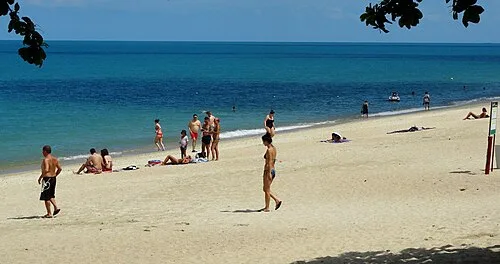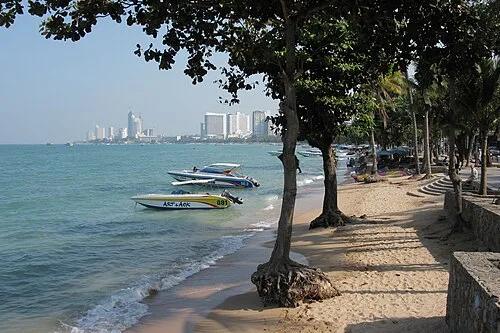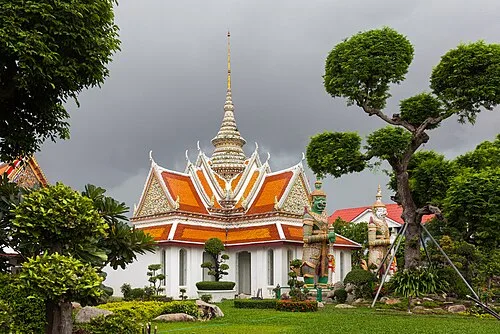


The best time to visit Thailand is November to February, the cool and dry season, when both coasts stay mostly rainless and temperatures sit around 25 to 32C. March to May turns hot, and June to October brings rain, though the Gulf islands like Koh Samui stay drier into September.
Thailand's seasons at a glance
Thailand runs on three broad seasons: cool and dry, hot, and rainy. The dates shift by a few weeks each year, and the two coasts do not rain at the same time.
| Season | Weather | What to expect | Best for | Ideal places |
|---|---|---|---|---|
| Cool and dry (Nov to Feb) | 25 to 32C, low rain, low humidity | Peak season, calm seas both coasts, highest prices | First trips, families, island-hopping | Phuket, Krabi, Bangkok, Chiang Mai |
| Hot and humid (Mar to May) | 33 to 40C, humid, first storms late May | Fewer crowds, lower rates, hazy north in Mar and Apr | Gulf diving, Songkran, budget beach trips | Koh Samui, Koh Tao, Pattaya |
| Green and rainy (Jun to Oct) | 28 to 33C, short heavy showers | Cheapest fares, lush scenery, rough Andaman seas Sep to Oct | Deals, quieter travel, the green north | Koh Samui (Jun to Sep), Bangkok, Chiang Mai |
When is the best time to visit Thailand from India?
For weather, November to February. For price, the green season from June to September, when fares and hotels drop.
- Best weather: December to February gives the calmest seas and clearest skies on both coasts, but carries the Christmas and New Year price spike, so book two to three months ahead.
- Cheapest fares: May, June and September see the lowest fares from most Indian metros, with the trade-off of green-season rain and some island days lost to weather.
- Summer school break: late April to June is hot and early green season; choose the Gulf islands like Koh Samui and Koh Phangan, which stay drier than Phuket then.
- Flight times: about 4 to 4.5 hours from Delhi and Kolkata, and 4.5 to 5.5 hours from Mumbai, Bengaluru, Chennai and Ahmedabad into Bangkok.
For the full routing and fares, see our guide on how to reach Thailand from India.
What are Thailand's three seasons?
Cool and dry is the most reliable window across the country; the hot season thins crowds; the green season is cheapest but wetter.
Cool and dry season (November to February)
Days sit around 25 to 32C with low humidity, and northern evenings can drop to the mid-teens. Seas are calm on both coasts, so island tours and ferries run daily. Prices peak and popular beaches fill, especially over Christmas and New Year, so book hotels and internal flights early if you travel in late December.
Hot season (March to May)
Temperatures climb from the low 30s in March to 38 to 40C by April, and humidity builds ahead of the monsoon. Two things to plan around: Songkran, the Thai New Year water festival held 13 to 15 April nationwide, and the crop-burning haze in the north, where Chiang Mai and Chiang Rai air quality falls sharply from mid-February to April. The Gulf islands are at their driest and best in these months.
Rainy or green season (June to October)
Rain usually comes as short heavy afternoon downpours rather than all-day grey, and flights and hotels are at their lowest. The catch sits on the Andaman coast: September and October are its roughest months, when speedboat trips to Phi Phi and the outer islands are cancelled at short notice. The Gulf coast holds up far better, so June to September suits Koh Samui, Koh Phangan and Koh Tao.
When should you visit each region and coast?
Thailand's two coasts sit on opposite monsoons, so the right months for Phuket are the wrong months for Koh Samui. Match the region to the season below.
| Region | Best months | When to avoid | Why it flips |
|---|---|---|---|
| Andaman: Phuket, Krabi, Phi Phi, Khao Lak | Nov to Apr | Sep to Oct | Southwest monsoon; Similan and Surin shut 15 May to 15 Oct 2026, Maya Bay 1 Aug to 30 Sep |
| Gulf: Koh Samui, Koh Phangan, Koh Tao | Feb to Apr and Jul to Sep | Oct to Dec | Northeast monsoon peaks in November; the Gulf is wettest October into December |
| Bangkok, Pattaya, central Thailand | Nov to Feb | Apr heat, Sep to Oct flood risk | Cool, dry city weather and the best shopping-sale window |
| Chiang Mai and the north | Nov to Feb | Mid-Feb to Apr | Coolest, clearest air; crop-burning smog blankets the north March into April |
The Andaman coast (Phuket, Krabi, Phi Phi)
November to April, when the sea is settled and every pier runs a full schedule. From late May the water gets rougher, and by September and October operators cancel outer-island trips with little warning. Two hard closures shape any plan: the Similan and Surin Islands shut 15 May to 15 October 2026, and Maya Bay on Phi Phi Leh closes to landings 1 August to 30 September. Compare our Phuket tour packages and Krabi tour packages, both timed around these closures.
The Gulf coast (Koh Samui, Koh Phangan, Koh Tao)
February to April and July to September, the Gulf's driest stretches, which run opposite to Phuket. The islands dodge the southwest monsoon and stay usable through the mid-year rains that soak the Andaman coast; their wet season lands later, October into December, with November the wettest. If you want islands during the Indian summer break, this is the coast to choose.
Bangkok, Pattaya and the north
Bangkok and Pattaya are best November to February, when temple, market and riverside days stop being a sweat test; April is punishing, past a 40C heat index, and September to October bring the heaviest rain. Northern Thailand has the country's most distinct cool season, but the worst air of the year from mid-February to April, when crop-burning smoke settles over Chiang Mai and Chiang Rai.
When is the worst time to visit Thailand?
There is no single bad month for the whole country, but four windows cause the most trouble, each with a simple fix.
On the Andaman coast, September and October bring rough seas that cancel ferries around Phuket, Krabi and Phi Phi. Switch to the drier Gulf islands, or shift to November.
- Mid-February to April in the north: crop-burning haze pushes Chiang Mai air quality to unhealthy levels. Head to the beaches instead, or visit the north November to January.
- April heat, nationwide: 38 to 40C and cities feel hotter. Base yourself on the islands where sea breezes help, or time the trip around Songkran on 13 to 15 April.
- Late December to early January, everywhere: peak crowds and the year's highest prices. Shift to mid-November or late January for the same weather at lower cost.
The overlap that works for both coasts is roughly January to April, when the Andaman side is dry and the Gulf has not yet turned wet.
When is the monsoon, and how do you plan around it?
Thailand has two monsoons that hit the coasts at different times, so you plan by coast, not by country.
- Southwest monsoon, about May to October: rain and rough seas on the Andaman coast (Phuket, Krabi, Khao Lak), worst in September and October.
- Northeast monsoon, about October to December: the Gulf coast's wettest weeks (Koh Samui, Koh Phangan), peaking in November.
- Pick one coast per trip in the monsoon; pairing Phuket with Koh Samui only works cleanly in the January to April overlap.
- Travel in June and the money saved on flights and hotels is real, but keep island day-trips flexible and buy travel insurance that covers cancellations.
Thailand month by month
A quick read on what each month delivers across the regions, so you can match your dates to the weather, crowds and prices.
| Month | Verdict for visitors |
|---|---|
| January | Peak of the cool, dry season and the best all-round month; calm seas both coasts; busiest and priciest after New Year |
| February | Still cool and dry, the year's lowest rainfall in many areas; excellent Gulf diving and clear northern hills |
| March | Heat builds to the mid-30s; northern burning season starts, so avoid Chiang Mai; Gulf islands at their best |
| April | Hottest month, 38 to 40C; Songkran 13 to 15 April; northern haze at its worst; best on the Gulf islands |
| May | Transition; Andaman monsoon begins second half, Similan and Surin close 15 May; green-season deals appear |
| June | Green season proper, short heavy showers; cheapest month for flights; Koh Samui and the Gulf stay drier |
| July | Warm and wet with sunny spells; the Gulf is in its good mid-year window; popular with Indian families |
| August | Wettest phase builds on the Andaman; Maya Bay closed from 1 August; the Gulf remains solid |
| September | The Andaman's roughest month with frequent boat cancellations; the cheapest overall month; the Gulf still workable |
| October | Andaman eases late, Similan reopens about 15 October; the Gulf turns wet; shoulder-season prices |
| November | Cool season returns and the Andaman reopens fully; the Gulf is at its wettest; Loy Krathong nationwide |
| December | Dry, cool and festive across most of the country; the highest prices of the year; both coasts good, Gulf showery early |
To match dates to a season-timed route, see our Thailand tour packages by duration.
Do Indians need a Thailand visa right now?
No visa is needed for tourist stays up to 30 days. You must file a free Thailand Digital Arrival Card online before you land.
- From 15 September 2026, Indian passport holders get 30 days of visa-free tourist entry, cut from the earlier 60 days, extendable by up to 30 more days at an officer's discretion.
- Thailand Digital Arrival Card (TDAC): mandatory for all foreign arrivals from 1 May 2025; file it free at the official government site within 72 hours before arrival.
- Tourist entry fee: a proposed levy for air arrivals (reported at 300 to 450 baht) is approved in principle but NOT being collected as of October 2026.
For flights, airports and the full entry checklist, see our guide on how to reach Thailand from India.
Key Thailand weather terms
The named places, seasons and terms that decide your timing, defined in one line each.
- Songkran: the Thai New Year water festival, held 13 to 15 April nationwide.
- Loy Krathong: the November full-moon festival of floating baskets and lanterns.
- Southwest monsoon: the May to October wind that brings rain to the Andaman coast.
- Northeast monsoon: the roughly October to December wind that soaks the Gulf coast.
- Similan Islands National Park: an Andaman dive park closed 15 May to 15 October each year.
- Maya Bay: the Phi Phi Leh bay closed to landings 1 August to 30 September each year.
- Suvarnabhumi (BKK): Bangkok's main international airport, east of the city.
- Don Mueang (DMK): Bangkok's older airport, the hub for most low-cost carriers.
- Thai baht (THB): Thailand's currency, about 2.7 rupees per baht in October 2026, and variable.
FAQs
November to February, the cool and dry season. Rainfall is low, humidity is comfortable and seas are calm on both the Andaman and Gulf coasts, so island tours run daily. It is also the busiest and most expensive stretch, with the sharpest price spike over Christmas and New Year.
September and October are worst for the Andaman coast, when rough seas cancel ferries around Phuket, Krabi and Phi Phi. March and April are worst for the north, when crop-burning haze fouls the air in Chiang Mai. April is the hottest month everywhere. If you travel then, choose the Gulf islands, which stay usable.
For weather, November to February. For price, June to September, when fares from Indian metros drop sharply. The Indian summer school break from late April to June suits the Gulf islands rather than Phuket. Direct flights run about 4 to 5.5 hours to Bangkok, and Indians get 30 days of visa-free entry as of September 2026.
November to April, the dry Andaman season, with settled seas and daily island trips. February is peak, while March and April stay dry with fewer crowds and better rates. Avoid September and October, when the southwest monsoon makes seas rough. The Similan and Surin parks are shut 15 May to 15 October.
February to April and July to September are the driest, best windows for Koh Samui, Koh Phangan and Koh Tao. The Gulf runs opposite to Phuket, so these islands stay good through the mid-year Andaman monsoon. Avoid October to December, when the northeast monsoon brings the Gulf its heaviest rain, peaking in November.
November to February, when the north is cool, dry and clear, with the Yi Peng lantern festival in November. Avoid mid-February to April, when crop-burning haze blankets Chiang Mai and Chiang Rai and air quality turns unhealthy. The green season, June to October, is lush and cheap with short afternoon showers.
Not entirely. Green-season rain, June to October, usually falls as short afternoon downpours, and flights and hotels are cheapest. The Gulf islands stay dry through much of it. The real problem is the Andaman coast in September and October, when rough seas cancel boats. Plan around the coast, and the monsoon can be good value.
Not the season, but it tightens long trips. From 15 September 2026, Indians get 30 days visa-free instead of 60, extendable by up to 30 days at an officer's discretion, plus the free Thailand Digital Arrival Card within 72 hours. A two or three-week trip is unaffected; a month-plus, multi-region tour needs closer planning.