Backpacking in Thailand: A First-Timer's Travel Guide
Backpacking in Thailand is cheap, easy and safe, which is why it is the classic first trip for new backpackers. Budget travellers get by on about ฿1,200 to ฿1,800 a day, follow a well-worn trail of Bangkok, the northern mountains and the southern islands, and move around on sleeper trains, buses and ferries.
Table of Contents
- Why is Thailand the best country to start backpacking?
- How much does backpacking Thailand cost?
- When is the best time to backpack Thailand?
- What is the best backpacking route in Thailand?
- How do you get around Thailand as a backpacker?
- Best places to backpack in Thailand
- Where do backpackers stay, and how much?
- Do you need a visa to backpack Thailand?
- Is Thailand safe for backpackers?
- Essential backpacking tips for Thailand
- What should Indian backpackers know?
- Key Thailand backpacking terms
- FAQs
Why is Thailand the best country to start backpacking?
Thailand is cheap, friendly and set up for budget travel, with cheap food, easy transport and a hostel in every town. It is the start of the Banana Pancake Trail through Southeast Asia, so a first-timer is never short of company or help.
Thailand is where most people take their first backpacking trip, and the reasons hold up. Your money goes a long way, a bed and a meal are easy to find, and the whole country is wired for budget travel, from night trains to island ferries.
It is also social. Thailand anchors the Banana Pancake Trail, the overland route through Southeast Asia, so you will meet other travellers at every hostel and on every bus. For a nervous first-timer, that means plenty of people to ask and plenty to tag along with.
You get a lot of trips in one country, too. In a few weeks you can go from a chaotic capital to cool northern mountains to white-sand islands, without a visa run or a hard border. It is an easy start that still feels like an adventure.
How much does backpacking Thailand cost?
A shoestring backpacker spends about ฿800 to ฿1,200 a day, or roughly ₹2,000 to ₹3,000, on a dorm bed, street food and local transport. A more comfortable backpacker budget runs ฿1,500 to ฿2,500 a day. Islands and party towns cost more.
Thailand is cheap if you eat and travel like a local, and it climbs fast if you drink in beach bars and book tours daily. The table below gives the typical costs so you can build your own daily budget.
Typical backpacker costs in Thailand
| Item | Approx cost (THB) | Approx cost (INR) |
|---|---|---|
| Hostel dorm bed | ฿200 to ฿500 | ₹500 to ₹1,250 |
| Budget private room | ฿400 to ฿1,200 | ₹1,000 to ₹3,000 |
| Street food meal | ฿40 to ฿100 | ₹100 to ₹250 |
| Local restaurant meal | ฿120 to ฿300 | ₹300 to ₹750 |
| Local beer | ฿70 to ฿120 | ₹175 to ₹300 |
| Scooter rental per day | ฿200 to ฿350 | ₹500 to ₹875 |
| Shoestring daily budget | ฿800 to ฿1,200 | ₹2,000 to ₹3,000 |
| Comfortable daily budget | ฿1,500 to ฿2,500 | ₹3,750 to ₹6,250 |
Costs are approximate and as of October 2026, and conversion runs about ฿1 to ₹2.5 . The islands, Full Moon Party and high season from December to February push prices up; the north and the wet season bring them down.
When is the best time to backpack Thailand?
The cool, dry season from November to February is the easiest time to backpack, with good weather countrywide. It is also the busiest and priciest. The wet season, May to October, is cheaper and quieter, but the two coasts have opposite rains.
The sweet spot is November to February: dry, not too hot, and good across the whole country, which is why it is peak season and why beds book up. March and April get very hot, and April brings Songkran, the water festival worth timing a trip around.
The wet season, May to October, is low season, with lower prices, fewer crowds and short, heavy downpours rather than all-day rain. It is a fine time to travel on a budget if you are flexible.
Remember the two coasts run on opposite weather. The Andaman side, Phuket and Krabi, is driest November to April; the Gulf islands, Koh Samui, Koh Phangan and Koh Tao, stay drier from January to September. Plan your island leg for whichever coast is dry when you go.
What is the best backpacking route in Thailand?
The classic route splits in two: a northern loop through Bangkok, Chiang Mai and Pai, and a southern loop through the islands. Two weeks covers one well; a month lets you do both at a relaxed pace.
Most first-timers follow a version of the same trail, and it works. Give yourself at least two weeks, and a month if you can.
The northern loop: start in Bangkok for two or three nights, take the overnight sleeper train to Chiang Mai for temples, markets and cheap cooking classes, then head up to the mountain town of Pai for a few slow days. Add Chiang Rai for the White Temple if you have time.
The southern loop: fly or train south, then island-hop. On the Andaman side, string together Krabi and Railay, Koh Phi Phi and Koh Lanta. On the Gulf side, link Koh Tao for diving, Koh Phangan for the Full Moon Party and Koh Samui for the airport. Pick one coast per trip, matched to the season.
A simple month: Bangkok, Chiang Mai and Pai in the first two weeks, then fly south for two weeks to islands on whichever coast is dry. Stay longer where you are happy and skip what you are not.
How do you get around Thailand as a backpacker?
Backpackers move by overnight sleeper train, long-distance bus, minivan, cheap domestic flight and island ferry, with Grab and the BTS or MRT inside the cities. Book longer trips a day ahead, or online through 12Go.
Thailand's transport is cheap and covers everywhere. The overnight sleeper train from Bangkok to Chiang Mai is a backpacker rite of passage and saves a night's bed. Government buses and private VIP coaches reach almost every town, and minivans fill the shorter hops.
For long distances, budget airlines like AirAsia, Nok Air and Thai Lion often cost little more than the bus and save a day. Islands are reached by ferry and speedboat, which slow down or stop in rough weather, so keep a buffer day.
In Bangkok, use the BTS Skytrain and MRT metro to beat the traffic, and Grab for door-to-door. For tuk-tuks and taxis, agree the fare first or insist on the meter. Book trains, buses and ferries ahead in high season, easiest on the 12Go website.
Renting a scooter is cheap and tempting, but it is also the biggest risk to a backpacker in Thailand. Many travellers crash, often without a licence or helmet, and travel insurance will not pay out if you ride without a valid licence. If you ride, wear a helmet, carry the right licence, and go slow.
Best places to backpack in Thailand
The core stops are Bangkok, Chiang Mai and Pai in the north, and the Gulf and Andaman islands in the south. Add Ayutthaya, Kanchanaburi and the northeast for a quieter, cheaper side of the country.
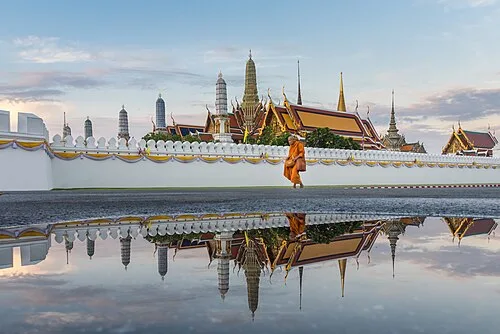
- Bangkok: the start and transport hub, with Khao San Road as the backpacker base, cheap street food and grand temples.
- Chiang Mai: the north's laid-back capital, full of temples, markets, cheap cooking and massage courses, and treks into the hills.
- Pai: a small, chilled mountain town three hours from Chiang Mai, known for waterfalls, hot springs and doing very little.
- Koh Tao, Koh Phangan and Koh Samui: the Gulf trio, for cheap diving, the Full Moon Party and an easy island base.
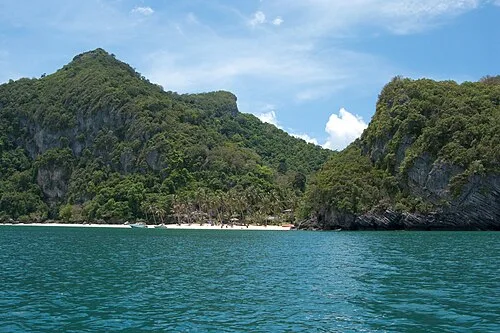
- Krabi, Railay and Koh Lanta: the Andaman side, for limestone cliffs, climbing and quieter beaches.
- Ayutthaya and Kanchanaburi: easy, cheap trips from Bangkok, for temple ruins by bike and the WWII Death Railway.
- Isaan, the northeast: the cheapest, least touristy region, for a taste of everyday Thailand and big village festivals.
Where do backpackers stay, and how much?
Backpackers stay in hostels and cheap guesthouses, from about ฿200 for a dorm bed to ฿1,200 for a private room. Book the first night, then book as you go. Hostels are also the best source of advice and company.
Thailand has a hostel in every traveller town, from basic fan dorms to flashpacker places with pods, pools and bars. A dorm bed runs about ฿200 to ฿500, and a private room in a guesthouse about ฿400 to ฿1,200, more on the islands and in high season.
Book your first night or two before you arrive, especially in Bangkok, then book a day or two ahead as you travel, which keeps your route flexible. Read recent reviews for cleanliness, location and noise, since party hostels are loud by design.
Beyond a bed, hostel staff and the common room are your best resources. They will steer you off the scams, onto the right bus and towards the good, cheap food, which is worth more than any guidebook.
Do you need a visa to backpack Thailand?
Most nationalities, including Indians, get 30 days visa-free as of September 2026. For a longer backpacking trip, apply for a 60-day tourist visa in advance, which can be extended by 30 days at an immigration office. You must also file the free arrival card.
For a short trip, the visa is simple. Many nationalities, Indians included, enter visa-free for up to 30 days as of September 2026, down from 60 days earlier in the year, per the Royal Thai Embassy in New Delhi.
For a longer backpacking trip, apply for a 60-day single-entry tourist visa in advance through Thailand's official e-visa system, which you can then extend by a further 30 days at a Thai immigration office for about ฿1,900.
Two things to have ready on arrival. The Thailand Digital Arrival Card is free and compulsory, filed online within 72 hours before you land, with the QR code saved to show at immigration. Border officers may also ask for proof of onward travel and funds of around ฿10,000 to ฿20,000 per person, so keep evidence on hand.
Is Thailand safe for backpackers?
Thailand is a safe country for backpackers, with low violent crime. The real risks are road accidents, common tourist scams, drink spiking at parties and harsh drug laws, not personal danger. A little care handles almost all of it.
Thailand is one of the safer countries to backpack, and most trips pass without trouble. The dangers that do exist are predictable, so know them.
- Roads: traffic accidents, above all on rented scooters, are the biggest real risk. Ride only with a licence and helmet, or skip it.
- Scams: the tuk-tuk driver who says a temple is "closed" and offers a gem-shop tour, the rigged jet-ski damage claim, and fake tour desks are the classics. Walk away and book through your hostel.
- Parties: at the Full Moon Party and in beach bars, watch your drink, go easy on the buckets, and never swim drunk at night.
- Drugs: penalties are severe, and cannabis, though sold openly, sits in a tightening legal grey area. Vapes and e-cigarettes are banned to bring in or use.
- Solo and female travellers: Thailand is generally comfortable for solo and female backpackers, with the usual sensible precautions at night and on transport.
Take out travel insurance that covers scooters and adventure activities before you go, and carry the tourist police number, 1155.
Essential backpacking tips for Thailand
Pack light, get a local SIM, carry cash, respect the temples and the monarchy, and insure yourself. The habits below save money and trouble on a first trip.
- Get a tourist SIM or eSIM at the airport for cheap, fast data; you will use it for maps, Grab and bookings constantly.
- Carry cash. Many hostels, street stalls and longtails take only cash, and ATMs charge a ฿220 foreign-card fee per withdrawal, so take out larger amounts less often.
- Pack light in a 40 to 50 litre backpack: quick-dry clothes, a rain layer, a padlock, a universal adaptor, a basic first-aid kit and modest cover for temples.
- Dress respectfully at temples, covering shoulders and knees, and remove your shoes where asked. Never point your feet at people or Buddha images, or touch anyone's head.
- Treat the monarchy with respect; disrespecting it is a serious criminal offence in Thailand.
- Drink bottled or filtered water, not tap, and carry a refillable bottle, as many hostels have refill stations.
- Haggle politely at markets and with tuk-tuks, but keep it good-natured and do not fight over small change.
- Buy travel insurance that covers scooters, diving and your gear, and keep digital copies of your passport and tickets.
What should Indian backpackers know?
Indians get 30 days visa-free as of September 2026 and should file the free arrival card. Thailand is cheap from India, with direct flights, easy vegetarian food and ATMs everywhere. Carry cash and a local SIM.
- Visa: as of September 2026, Indian passport holders may enter visa-free for up to 30 days, reduced from the earlier 60; for longer, apply for a 60-day tourist e-visa in advance.
- Arrival card: the Thailand Digital Arrival Card is free and required; complete it online in the three days before you fly and keep the QR code.
- Flights: direct, cheap flights run from Delhi, Mumbai, Bengaluru, Kolkata and other metros to Bangkok, and to Phuket for the south, so you can fly straight into your region.
- Money: budget roughly ₹2,000 to ₹6,000 a day depending on your style, carry some cash, and expect the ฿220 ATM fee on foreign-card withdrawals.
- Food: vegetarians and Jain travellers do well, with Indian restaurants in Bangkok, Chiang Mai, Phuket and the islands, and plenty of vegetable, tofu and rice dishes everywhere.
For more on planning, see our guides to the islands in Thailand, the best time to visit Thailand and the Thailand visa for Indians, plus our Thailand tour packages and Chiang Mai tour packages if you would rather have parts of the trip arranged.
Key Thailand backpacking terms
A quick reference to the words and names that come up most on the backpacker trail.
- Banana Pancake Trail: the well-worn overland backpacker route through Southeast Asia, with Thailand at its heart.
- Khao San Road: the backpacker street in Bangkok, a hub of cheap beds, bars and travel desks.
- Songthaew: a shared pickup-truck taxi with two bench seats, a cheap way around towns like Chiang Mai.
- Sleeper train: the overnight State Railway service, most famously Bangkok to Chiang Mai, with reclining berths.
- 12Go: the booking site most backpackers use for trains, buses and ferries.
- Grab: the ride-hailing and food-delivery app used across Thai cities.
- Full Moon Party: the monthly beach rave on Koh Phangan's Haad Rin beach.
- TDAC: the free Thailand Digital Arrival Card every visitor files before arrival.
- Thai baht (THB): the currency; about ฿1 to ₹2.5 as of October 2026, and the rate moves.
FAQs
A shoestring backpacker spends about ฿800 to ฿1,200 a day, roughly ₹2,000 to ₹3,000, on a dorm bed, street food and local transport. A more comfortable style runs ฿1,500 to ฿2,500 a day. For a month, budget roughly ₹60,000 to ₹1,50,000 plus flights, more if you drink out and take daily tours on the islands.
Two weeks is enough for one region, either the northern loop of Bangkok, Chiang Mai and Pai, or a southern island run. A month lets you do both at a relaxed pace, which is the classic trip. If you have longer, a 60-day tourist visa and an extension give you up to 90 days to go slow and add neighbouring countries.
Yes. Thailand has low violent crime and a huge, friendly backpacker scene, so first-timers and solo travellers do well. The real risks are road accidents on scooters, common tourist scams, and drink safety at parties, not personal danger. Take basic precautions, insure yourself, and you will be fine.
Most nationalities, including Indians, get 30 days visa-free as of September 2026, plus the free Thailand Digital Arrival Card filed before arrival. For a longer trip, apply for a 60-day tourist visa in advance and extend it by 30 days at immigration for about ฿1,900. Confirm the current rules before you travel, as they change.
The classic first route is the northern loop, Bangkok to Chiang Mai by sleeper train and up to Pai, then a flight south for a week or two of islands on whichever coast is dry. It covers cities, mountains and beaches in two to four weeks and follows a well-supported trail, so you are never far from help.
The wet season, May to October, is the cheapest, with lower bed prices, fewer crowds and short daily downpours rather than constant rain. The trade-off is rougher seas and some ferry disruption, and the two coasts rain at different times. The cool, dry season from November to February is the best weather but the most expensive.
Yes, easily. Street stalls and restaurants serve plenty of vegetable, tofu, noodle and rice dishes, and Indian and vegetarian restaurants are common in Bangkok, Chiang Mai, Phuket and the islands. Learn the phrase "jay" for strict vegetarian or vegan food, and watch for fish sauce and shrimp paste, which are used widely.