Thailand is famous for its beaches and islands, Thai food and street food, gold-roofed Buddhist temples, cheap travel, Muay Thai, Thai massage and big festivals like Songkran. For Indian travellers it also means visa-free entry for short stays, direct flights from most metros and a budget that stretches much further than it does at home.
Last updated: October 2026.
Table of Contents
- What is Thailand famous for?
- Thai food and street food
- Why is Thailand famous for its beaches and islands?
- Temples and Buddhist culture
- What else is Thailand known for?
- Is Thailand famous for cheap travel?
- Thai festivals: Songkran, Loy Krathong and Yi Peng
- What should Indian travellers know before visiting?
- What is Thailand famous for that you should be careful about?
- FAQs
What is Thailand famous for?
Thailand is famous for beaches and islands, street food, Buddhist temples, affordable travel, Muay Thai and festivals, spread across a country with two coasts and a cool northern hills region. Each thing it is known for sits in a specific place and a specific season, which is what this guide maps out.
Most travellers arrive through Bangkok, either Suvarnabhumi (BKK) or the older Don Mueang (DMK), and spread out from there. The beaches are split across two coasts. The Andaman side holds Phuket (HKT), Krabi (KBV) and the Phi Phi Islands. The Gulf side holds Koh Samui (USM), Koh Phangan and Koh Tao. The north, around Chiang Mai (CNX), is cooler and greener, with temples, hill country and elephant camps. Knowing which is which decides your trip, because the two coasts have opposite wet seasons.
Here is what Thailand is known for and where each one is at its best.
| Famous for | Where to experience it | Best months |
|---|---|---|
| Andaman beaches and islands | Phuket, Krabi, Phi Phi, Railay | November to April |
| Gulf islands | Koh Samui, Koh Phangan, Koh Tao | January to August, driest Feb to Apr |
| Street food | Bangkok, Chiang Mai | Year-round |
| Temples | Bangkok, Ayutthaya, Chiang Mai, Chiang Rai | November to February, cooler |
| Muay Thai and nightlife | Bangkok, Phuket, Pattaya | Year-round |
| Songkran water festival | Nationwide, big in Bangkok and Chiang Mai | 13 to 15 April |
| Loy Krathong and Yi Peng lanterns | Chiang Mai, Sukhothai | November |
| Full Moon Party | Haad Rin, Koh Phangan | Monthly, full moon |
Thai food and street food
Thai food is one of the main reasons people come, and street food is where it is cheapest and best. Expect bold, fresh, often fiery flavours, with plenty for vegetarians once you know what to ask for.
The dishes travellers chase are tom yum, the hot and sour prawn soup, pad thai, green and red curry, som tam papaya salad, and mango sticky rice for dessert. In the north, around Chiang Mai, the signature plate is khao soi, a coconut curry noodle. A street meal usually costs 50 to 100 THB (around 130 to 260 rupees), which is why eating well in Thailand costs so little.
Indian vegetarians can eat well, but say "jay" (strict vegetarian) or "mang sa wirat" and ask them to leave out fish sauce, oyster sauce and shrimp paste, which hide in many dishes. Dedicated Indian restaurants cluster in Bangkok's Sukhumvit and around Phuket and Pattaya if you want a familiar meal.
If food is the point of your trip, our guide to the best food in Thailand breaks down the dishes, the markets and what to order region by region.
Why is Thailand famous for its beaches and islands?
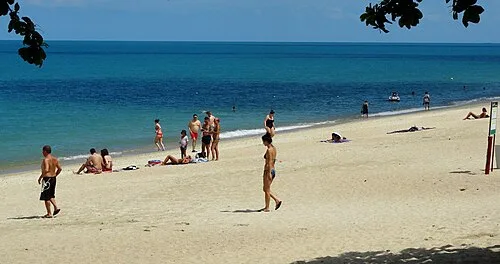
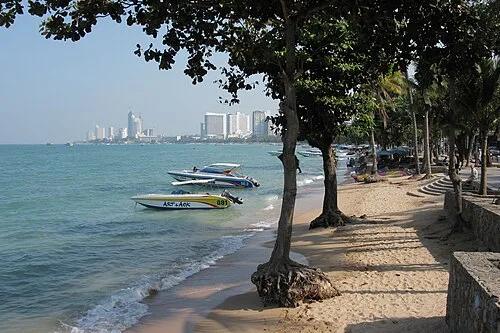
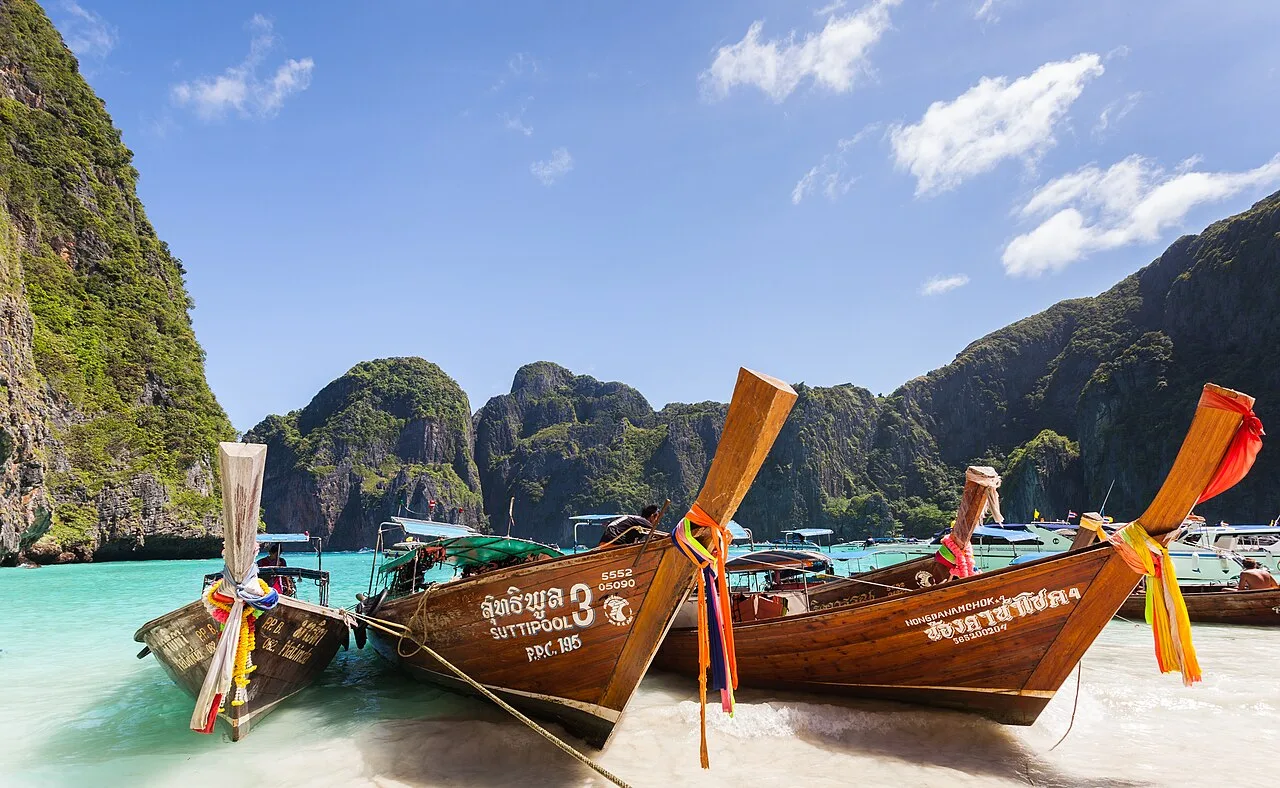
Thailand is famous for warm, calm, swimmable beaches backed by limestone cliffs and reefs, reached cheaply by ferry and speedboat. The catch is timing, because the two coasts are wet at opposite times of year.
The Andaman coast, which means Phuket, Krabi, the Phi Phi Islands and Railay, is at its best from November to April and wettest from May to October. The Gulf islands, Koh Samui, Koh Phangan and Koh Tao, run on a different clock, staying drier through the middle of the year and getting their heaviest rain from October to December. If you travel in the monsoon, pick the coast that is dry, not the famous name.
Some of the most famous islands close for part of the year. The Similan and Surin Islands, known for diving, shut during the monsoon, roughly from mid-May to mid-October. Maya Bay on Koh Phi Phi Leh, the beach from the film, closes annually to let the reef recover, in recent years through August and September. Check the dates before you book a day trip
To match the right island to your dates, our Phuket tour packages cover the Andaman side, and the best-time guide below sorts the rest out.
Temples and Buddhist culture
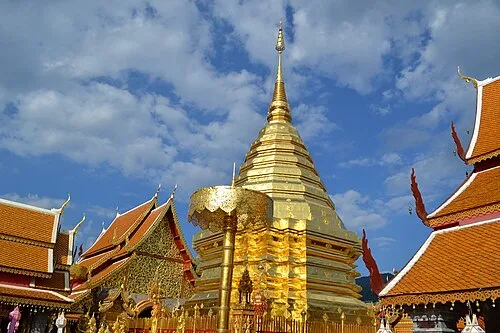
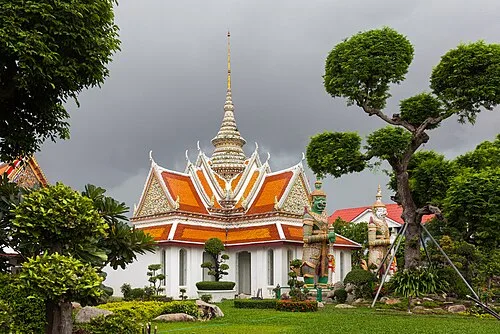
Thailand is famous for its Buddhist temples, called wat, with gold spires, reclining Buddhas and ornate halls. The country is mostly Theravada Buddhist, and temples are working places of worship, not just sights.
The ones travellers name are the Grand Palace and Wat Pho, home of the giant Reclining Buddha, both in Bangkok, Wat Arun on the river, Wat Phra That Doi Suthep above Chiang Mai, and the striking white Wat Rong Khun near Chiang Rai. The old capital of Ayutthaya, a short trip from Bangkok, is a field of temple ruins and a UNESCO site.
Temples enforce a dress code. Cover your shoulders and knees, remove your shoes where signs ask, and do not climb on or pose disrespectfully with Buddha images. The Grand Palace turns away anyone in shorts or vests at the gate. Carry a light scarf or a sarong, which is the easy fix.
What else is Thailand known for?
Beyond beaches and temples, Thailand is known for Muay Thai, Thai massage, markets, nightlife and the Full Moon Party. These are the experiences that fill the gaps between the big sights.
Muay Thai, the national martial art, is watched at Bangkok's Rajadamnern and Lumpinee stadiums and practised at gyms countrywide. Traditional Thai massage is cheap and everywhere, from around 250 to 400 THB (about 650 to 1,040 rupees) an hour. Markets run from Bangkok's vast Chatuchak Weekend Market to the floating markets at Damnoen Saduak and Amphawa, and the night bazaars of Chiang Mai. Nightlife ranges from Bangkok rooftop bars to the beach clubs of Phuket and Pattaya, and the monthly Full Moon Party on Haad Rin beach in Koh Phangan pulls thousands.
Elephants are a part of Thailand's image too, but how you see them matters, which the warnings section covers.
Is Thailand famous for cheap travel?
Yes. Thailand is famous for giving a lot of holiday for the money, which is a big part of why Indians choose it over Dubai or the Maldives. Food, transport and local stays are cheap, though islands and alcohol cost more.
A rough daily spend, outside flights and visa, looks like this for a mid-budget trip.
| Item | Typical cost (THB) | Approx rupees |
|---|---|---|
| Hostel dorm bed | 300 to 600 | 780 to 1,560 |
| Budget hotel double room | 800 to 1,500 | 2,080 to 3,900 |
| Street or local meal | 50 to 100 | 130 to 260 |
| City transport (BTS, MRT, songthaew) | 20 to 60 a ride | 50 to 155 |
| Island day trip by speedboat | 1,000 to 2,000 | 2,600 to 5,200 |
Bangkok and Chiang Mai are the cheapest bases. Phuket, Koh Samui and the resort islands cost noticeably more for rooms, taxis and drinks, so a beach-heavy trip is not as cheap as a city-and-north one.
Thai festivals: Songkran, Loy Krathong and Yi Peng
Thailand is famous for Songkran, the April water festival that doubles as Thai New Year, and for the November lantern festivals Loy Krathong and Yi Peng. Both are worth planning a trip around.
Songkran runs on 13 to 15 April nationwide, with streets turning into water fights, biggest in Bangkok, Chiang Mai and Phuket. Loy Krathong, when people float small lit offerings on water, and Yi Peng, the Lanna sky-lantern release, fall in November on dates set by the lunar calendar, and Chiang Mai is the place to see them.
Songkran is the single busiest travel week in Thailand. Book flights and hotels well ahead, expect higher prices, and keep your phone and documents in a waterproof pouch, because everything on the street gets soaked.
If festivals are your reason to go, time it using our best time to visit Thailand guide, which lines the festivals up against weather and crowds.
What should Indian travellers know before visiting?
Indian travellers can enter Thailand visa-free for 30 days, need to file the online arrival card before landing, and reach Bangkok in about four hours from most metros. The practical details below are specific to an Indian passport.
As of October 2026, Indian passport holders get 30 days visa-free for tourism, cut from 60 days on 15 September 2026. You also have to file the Thailand Digital Arrival Card (TDAC) online, free, within three days before you arrive, at tdac.immigration.go.th. It has been mandatory for all foreign visitors since 1 May 2025
- Visa: 30 days visa-free on arrival for tourism. A stay can usually be extended once at a Thai immigration office, for about 1,900 THB (around 4,940 rupees).
- Flights: direct flights run to Bangkok from Delhi, Mumbai, Kolkata, Chennai, Bengaluru and more, taking roughly 4 to 4.5 hours. Don Mueang (DMK) and Suvarnabhumi (BKK) are different airports, so check which one your flight uses.
- Money: carry some baht for arrival, then use ATMs, which charge a fixed foreign-card fee of around 220 THB per withdrawal. Cards work in malls and hotels, less so at street stalls.
- Food and SIM: Indian and vegetarian food is easy in the cities. A tourist SIM with data is cheap and sold at the airport.
For the full entry breakdown, see our Thailand visa guide for Indians, and when you are ready to book, our Thailand tour packages cover flights, stays and transfers in one price.
What is Thailand famous for that you should be careful about?
Thailand is also known for a few things that catch visitors out: tourist scams, strict drug and vape laws, unethical animal attractions and an open sex-tourism scene. Knowing them in advance keeps a cheap holiday from turning expensive.
The items below carry real money or legal risk. Read them before you go.
- Tuk-tuk and taxi scams: drivers quote inflated flat fares or run a "the temple is closed, let me take you shopping" detour for commission. Agree the fare first, or use metered taxis and the Grab app. Better alternative: the BTS and MRT in Bangkok are cheap, fast and scam-proof.
- Gem and tailor scams: anyone steering you to a "government" gem shop or a once-only sale is working a commission. Buy nothing you were led to.
- Jet-ski and bike damage scams: operators claim pre-existing damage on return and demand cash. Photograph the vehicle and the existing scratches before you take it, or skip rentals from beachfront touts.
- Cannabis: recreational use is no longer legal. Since 25 June 2025 cannabis is a controlled herb for medical use only, and buying flowers needs a Thai prescription (PT33). Unprescribed possession or smoking in public can bring fines and even a short jail term. The simple rule for a tourist is to leave it alone.
- Vapes: e-cigarettes and vape liquids are banned outright in Thailand. Bringing one in can mean confiscation, a heavy fine or worse, so do not pack a vape.
- Elephant attractions: elephant riding and circus-style shows harm the animals. Choose a genuine sanctuary where you watch, feed and bathe elephants rather than ride them, and check for independent reviews before booking.
- Sex tourism: areas of Pattaya, Bangkok's Patpong and parts of Phuket have an open adult-entertainment scene that can be confronting, especially with family. It is easy to steer around once you know which streets to skip.
Thailand's fame is also its pressure point. The Grand Palace, Maya Bay and Patong can be crowded and heavily commercialised, and the sex-tourism scene in parts of Pattaya and Bangkok is jarring if you arrive unprepared. Going in with open eyes, and picking quieter spots, is what separates a good trip from a disappointing one.
FAQs
Thailand is best known for its beaches and islands, cheap and bold street food, gold Buddhist temples, Muay Thai, Thai massage and the Songkran water festival. For most first-time visitors from India it comes down to warm beaches, great food and a budget that goes a long way, all within a four-hour flight of home.
Indian passport holders can visit Thailand visa-free for 30 days for tourism, reduced from 60 days on 15 September 2026. You must also file the free Thailand Digital Arrival Card online within three days of arrival. Carry proof of onward travel and accommodation. Confirm the current rule with the Royal Thai Embassy before you fly.
Yes, Thailand is one of the better-value trips for Indians. Street meals run 50 to 100 THB (about 130 to 260 rupees), city transport is cheap, and budget rooms are easy to find. Resort islands like Phuket and Koh Samui cost more, so a Bangkok and Chiang Mai trip stretches your money furthest.
Thailand is famous for tom yum soup, pad thai, green and red curries, som tam papaya salad and mango sticky rice, with khao soi noodles in the north. Street food is the cheapest and often the best. Vegetarians can eat well by asking for "jay" food and leaving out fish and oyster sauce.
It depends on the season. For November to April, the Andaman islands of Phuket, Krabi and Phi Phi are at their best. From roughly January to August the Gulf islands of Koh Samui, Koh Phangan and Koh Tao are drier. Match the island to your travel dates rather than the famous name.
Thailand is generally safe and very popular with Indian families. The main things to manage are tourist scams, road safety on scooters, and steering clear of the adult nightlife zones in parts of Pattaya and Bangkok. Stick to metered taxis or Grab, book reputable tours, and the trip is smooth.
No, not recreationally. Since 25 June 2025 cannabis is restricted to medical use, and buying flower legally needs a Thai prescription. Public use and unprescribed possession can bring fines and jail time. Vapes are separately banned. For a tourist, the safe choice is to avoid both.
Five to seven days suits a first trip, enough for Bangkok plus one beach or the north. Ten days or more lets you combine a city, the islands and Chiang Mai without rushing. A short four-day Bangkok and Pattaya break works if time is tight.